
We are compliant with all standards and regulations set by the Australian Government, our team is fully licensed and insured.
Friable Asbestos Removal Sydney
If your home was built before the late 1980s and you have loose fibre insulation, old pipe lagging or sprayed ceilings, you may be dealing with friable asbestos. This is the high-risk type that crumbles by hand and releases airborne fibres with very little disturbance. Rosemont Contractors holds a Class A asbestos removal licence (AD213403) and handles friable removal across Sydney Metro, the Northern Beaches, Central Coast, Wollongong, the Blue Mountains and Western Sydney.
This includes high-risk friable asbestos removal handled under our Class A licence.
Request a free quote or call 0475 000 021 to speak with a licensed assessor today.
What Is Friable Asbestos?
Friable asbestos is any asbestos containing material that can be crumbled, pulverised or reduced to powder by hand pressure when dry. Because the fibres are loosely bound, they become airborne very easily, even from light vibration, foot traffic above a ceiling cavity, or a tradie working nearby.
This is different to bonded asbestos removal, where the asbestos fibres are locked into a hard cement matrix (the classic fibro sheet on garages, eaves and fences). Bonded asbestos is dangerous when cut, drilled or smashed. Friable asbestos is dangerous just sitting there if it gets touched or aged.
The health risks of inhaled fibres are the same for both types: asbestosis, lung cancer, pleural disease and mesothelioma. With friable material, the exposure happens faster and with less warning, which is why NSW regulations treat it as a separate licence category.
Loose, crumbling materials need friable asbestos removal, which we handle under our Class A licence.
How Rosemont Contractors Manages Asbestos Encapsulation in Sydney
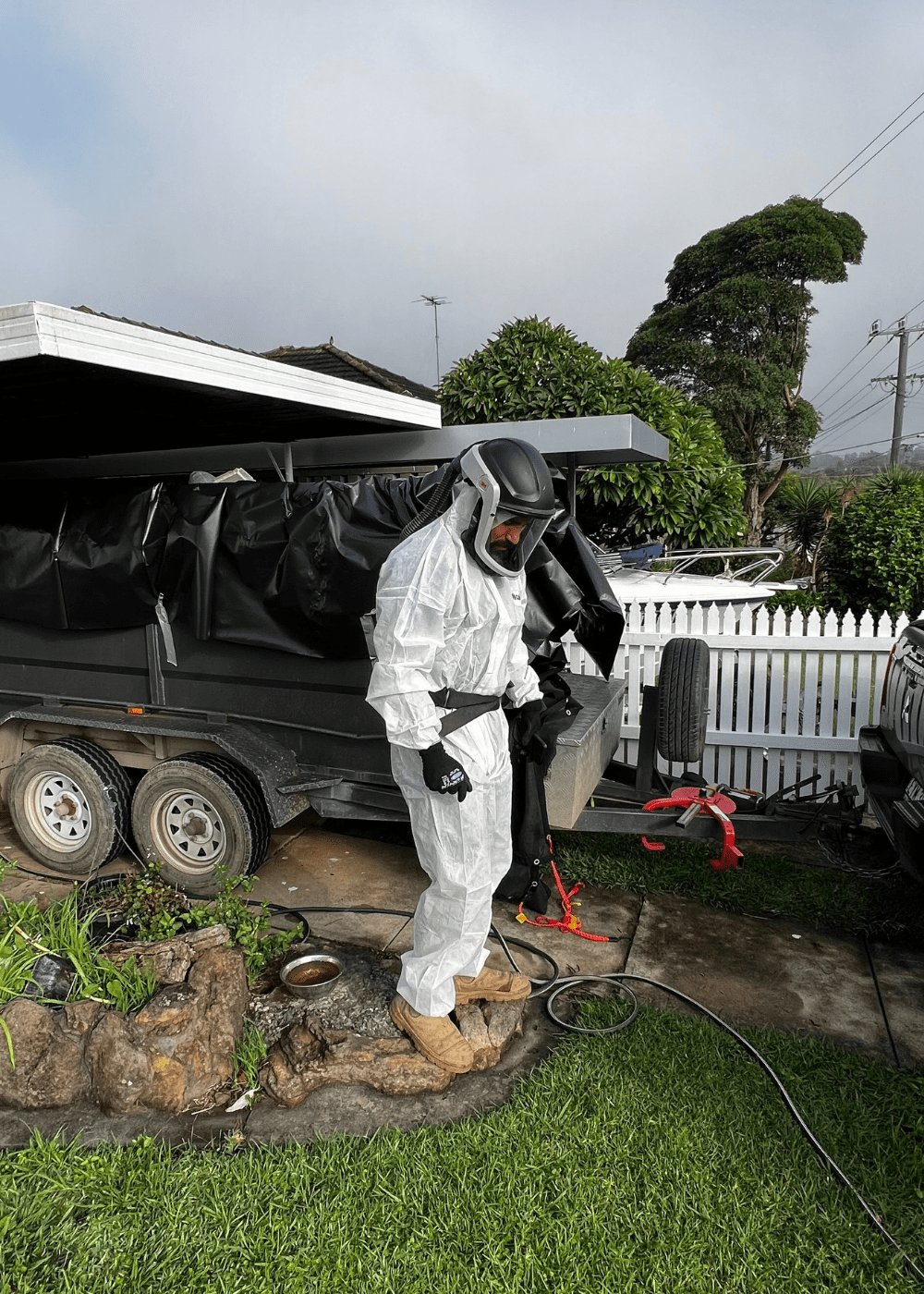
Every asbestos encapsulation project we deliver in Sydney follows a controlled, compliance-driven system aligned with SafeWork NSW requirements and WHS Regulation 2011. Our structured process protects occupants, limits fibre risk, and ensures documented outcomes for residential, strata, and commercial properties.
Comprehensive Site Assessment
We begin with a detailed inspection of asbestos cement materials to confirm bonding conditions and structural stability. Where material composition remains uncertain, we coordinate accredited testing. This assessment defines suitability, control measures, and the legal pathway before any encapsulation work proceeds.
Regulated Surface Preparation
Our team establishes controlled work zones using wet methods and HEPA filtration equipment to minimise airborne fibre release. Surface preparation removes loose contaminants and prepares the substrate to achieve secure encapsulant adhesion while maintaining strict site safety standards.
Approved Encapsulation Application
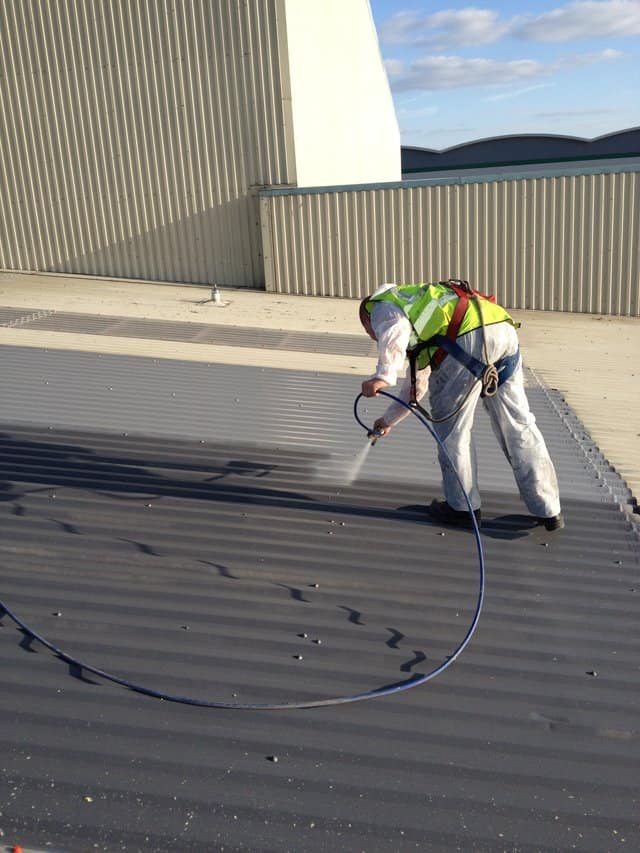
We apply a bridging or penetrating encapsulation system selected for the material type, exposure conditions, and long-term performance requirements. Each coating is installed according to manufacturer specifications to ensure full coverage, durability, and compliant fibre containment.
How We Remove Friable Asbestos Safely
Air monitoring is mandatory on all friable asbestos removal projects.
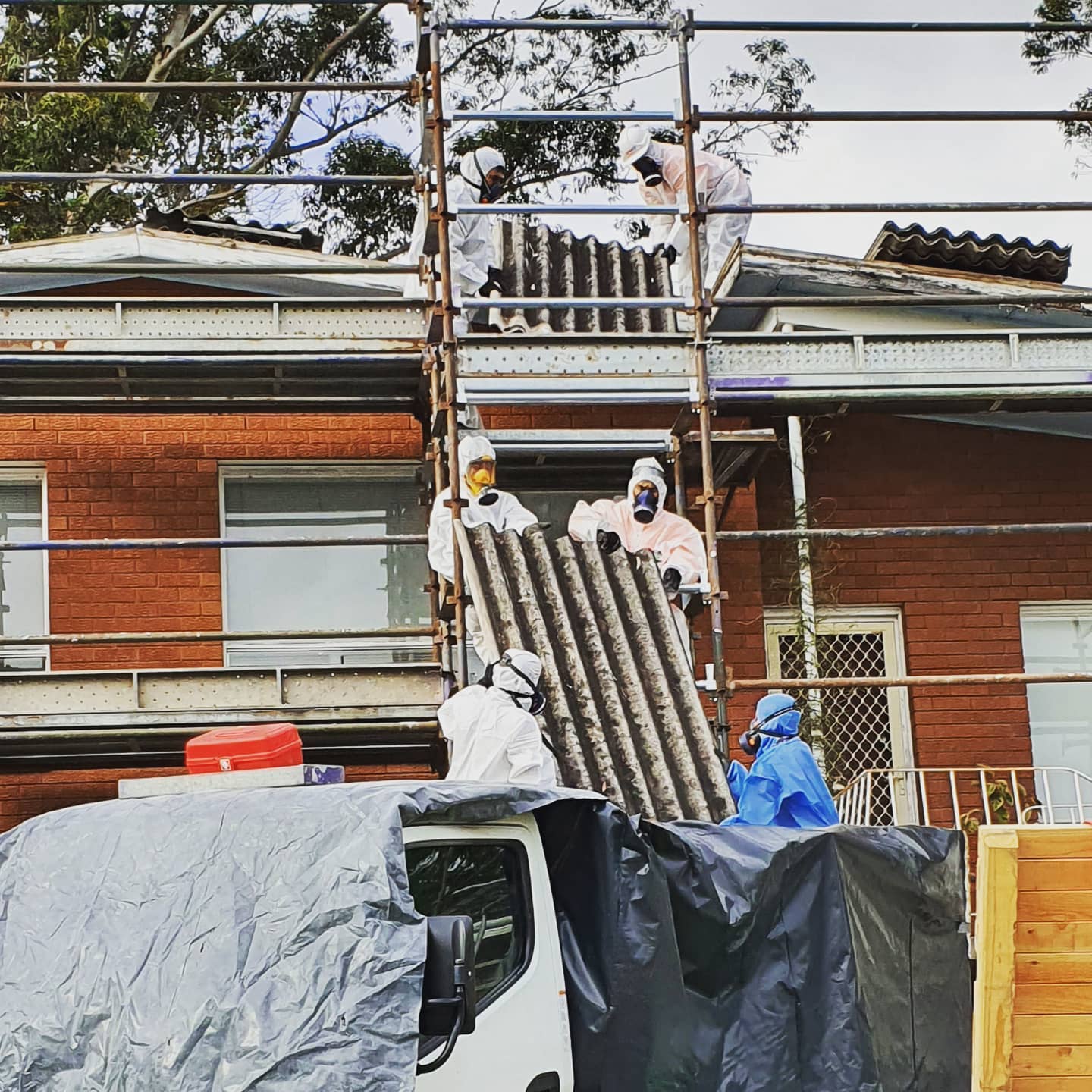
Friable removal follows a much stricter process than bonded work. Every job we run includes:
Site inspection and risk assessment
We map the affected area, identify the fibre type and confirm the safest removal method.
Control plan and notifications
Where required, we notify SafeWork NSW five days before work begins.
Sealed enclosure
The work area is wrapped in heavy polythene with airlocks, decontamination chambers and HEPA filtered negative pressure units running the entire time.
Wet removal techniques
Fibres are suppressed using fine misting and PVA encapsulant to prevent airborne release during dismantling.
Independent air monitoring during friable removal
Air samples are taken before, during and after to confirm fibre counts stay below 0.01 fibres per millilitre.
Compliant waste disposal
All friable waste is double-bagged, sealed, labelled and transported to a licensed asbestos disposal facility. Tip dockets are kept on file for your records.
Independent clearance certificate
A licensed assessor, separate from the removal team, signs off the site as safe before anyone re-enters.
After the Removal: Restoration in House
Most homeowners discover friable asbestos in the middle of a renovation or sale. Once the material is gone, you are left with a ceiling cavity, a wall lining or a pipe run that needs rebuilding. Most asbestos removalists walk away at this stage and hand you over to a second contractor.
Rosemont holds both a Class A asbestos licence (AD213403) and an NSW carpentry licence (398318C). Our carpentry team replaces the wall sheets, eaves, ceilings, pipe boxing and structural framing that came out with the asbestos. That saves you the gap between contractors, the second site mobilisation and the back and forth of two project schedules.
If you have found loose fibre insulation, damaged pipe lagging or any material you think might be friable asbestos, stop work, keep people out of the area, and call us. We will inspect the site, arrange asbestos testing if needed, and quote the full removal and restoration in one job.
Pricing differs for friable asbestos removal because of the enclosure, air monitoring and clearance steps.
Call 0475 000 021 or request a free quote online. Our team responds to all enquiries within 24 hours.
Friable Asbestos Removal FAQs
What is friable asbestos?
Friable asbestos is any asbestos containing material that can be crumbled or reduced to powder by hand when dry. It releases fibres into the air very easily, which makes it higher risk than bonded fibro sheet.
Why is friable asbestos more dangerous than bonded asbestos?
The fibres are loosely held together rather than locked into cement. That means normal activity, vibration or aging is enough to release them. Bonded asbestos generally needs to be cut, drilled or broken before it becomes a health risk.
Do I need a Class A removalist for friable asbestos?
Yes. SafeWork NSW requires a Class A licence for any quantity of friable asbestos removal. A Class B contractor or unlicensed worker cannot legally remove friable material.
How is friable asbestos removed safely?
The work area is sealed inside a polythene enclosure with HEPA filtered negative pressure. The material is wet down, removed in small sections, double-bagged for disposal, and the area is air monitored throughout. A clearance certificate is issued by an independent assessor before re-entry.
Do you handle the rebuild after removal?
Yes. Rosemont holds an NSW carpentry licence and rebuilds ceilings, walls, eaves and structural framing after the asbestos work, so you do not need a second contractor.