

We are compliant with all standards and regulations set by the Australian Government, our team is fully licensed and insured.
Asbestos Fence Removal Sydney
If you are pulling down an old fibro fence in Sydney, there is a real chance the sheeting contains asbestos. Most boundary and side fences built before the late 1980s were made from cement sheet bonded with asbestos fibres, often branded as “fibro”. Rosemont Contractors handles fence assessment, removal, transport and licensed disposal across Sydney, with clearance certificates available on request. We hold a Class A asbestos licence (AD213403) and an NSW carpentry licence (398318C), so we can replace the fence as well.
We also handle asbestos fence removal, including disposal and replacement fencing.
Get a free quote or call 0475 000 021 to book a site inspection.
How to Tell if Your Fence Is Asbestos
Most asbestos fences look like grey cement sheets, around 4mm to 6mm thick, often with a slightly fibrous broken edge. They were popular for backyard, boundary and side fences from the 1940s through to the late 1980s. Common signs include:
- The fence is more than 30 years old
- The sheets are grey, hard, and ring slightly when tapped (not hollow like Colorbond, not soft like timber)
- The edges show fine fibres if chipped or broken
- The fence panels are bolted or screwed between timber or concrete posts
- The surface is weathered, cracked or mossy on the shady side
If you are not sure, do not start prying or breaking sheets. Book us in to test your fence for asbestos first. A small sample sent to a NATA accredited lab confirms the result within a few business days.
Old fibro fences are a common job. See our fence removal service.
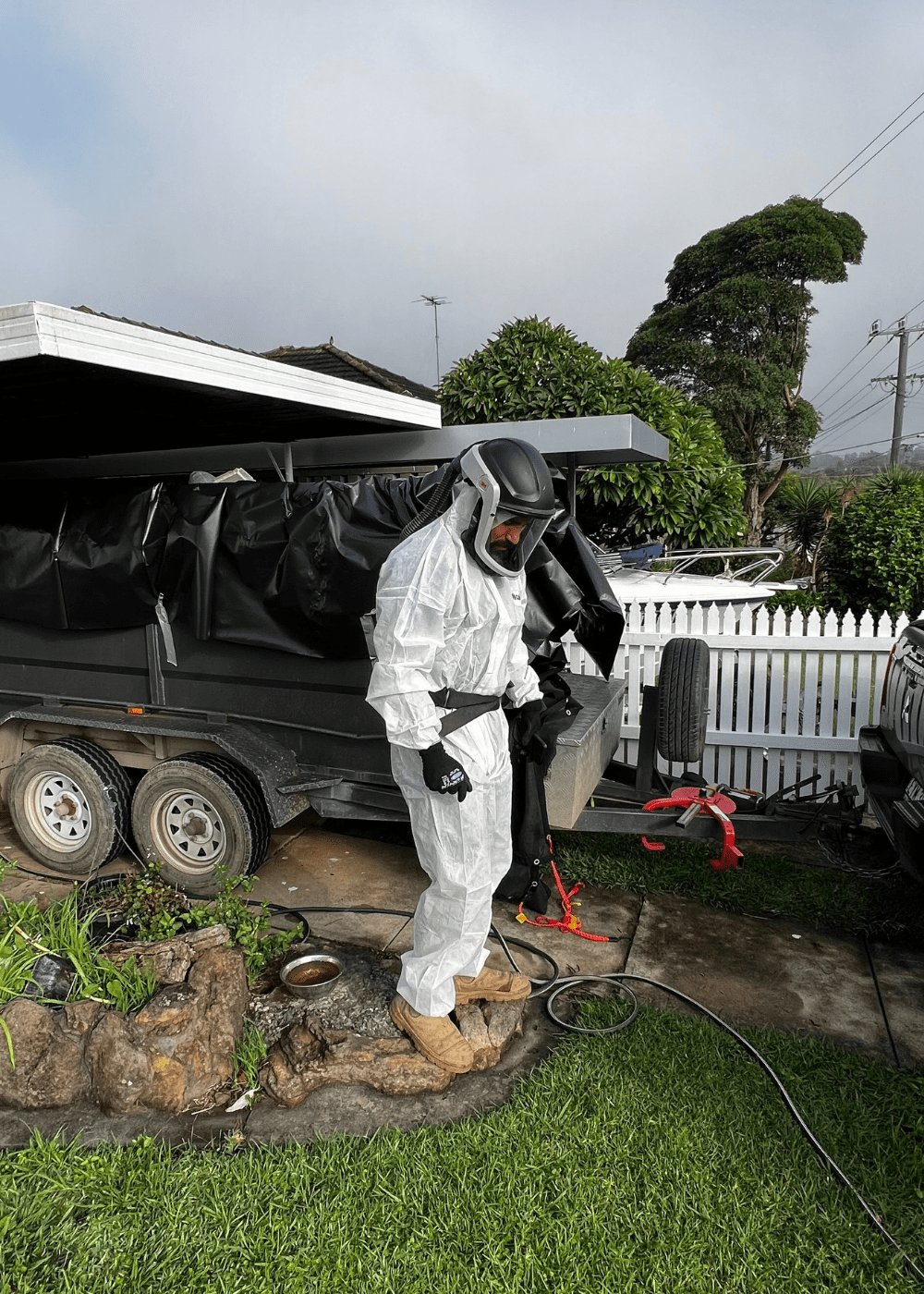
How Rosemont Contractors Manages Asbestos Encapsulation in Sydney
Every asbestos encapsulation project we deliver in Sydney follows a controlled, compliance-driven system aligned with SafeWork NSW requirements and WHS Regulation 2011. Our structured process protects occupants, limits fibre risk, and ensures documented outcomes for residential, strata, and commercial properties.
For boundary fences, see fence removal costs for what drives the price.
Comprehensive Site Assessment
We begin with a detailed inspection of asbestos cement materials to confirm bonding conditions and structural stability. Where material composition remains uncertain, we coordinate accredited testing. This assessment defines suitability, control measures, and the legal pathway before any encapsulation work proceeds.
Regulated Surface Preparation
Our team establishes controlled work zones using wet methods and HEPA filtration equipment to minimise airborne fibre release. Surface preparation removes loose contaminants and prepares the substrate to achieve secure encapsulant adhesion while maintaining strict site safety standards.
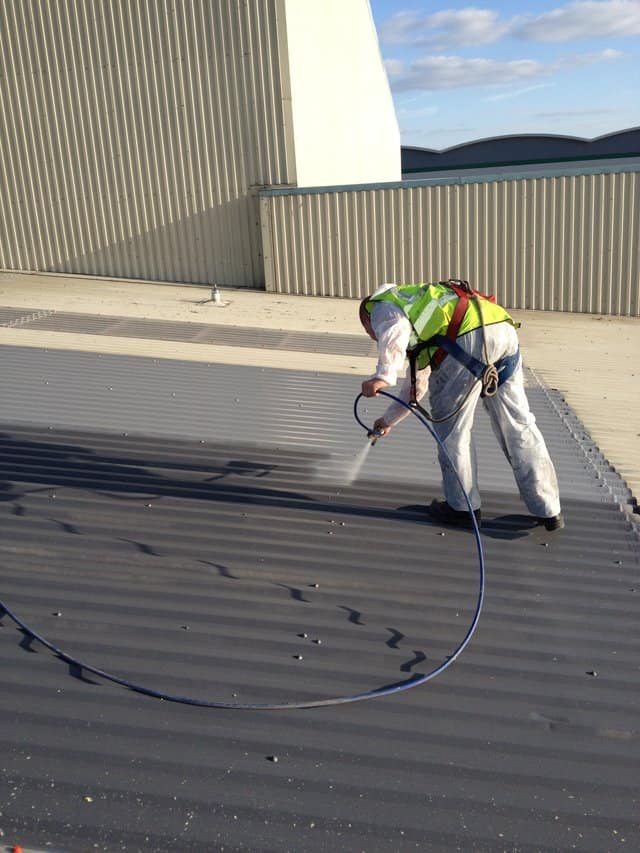
Approved Encapsulation Application
We apply a bridging or penetrating encapsulation system selected for the material type, exposure conditions, and long-term performance requirements. Each coating is installed according to manufacturer specifications to ensure full coverage, durability, and compliant fibre containment.
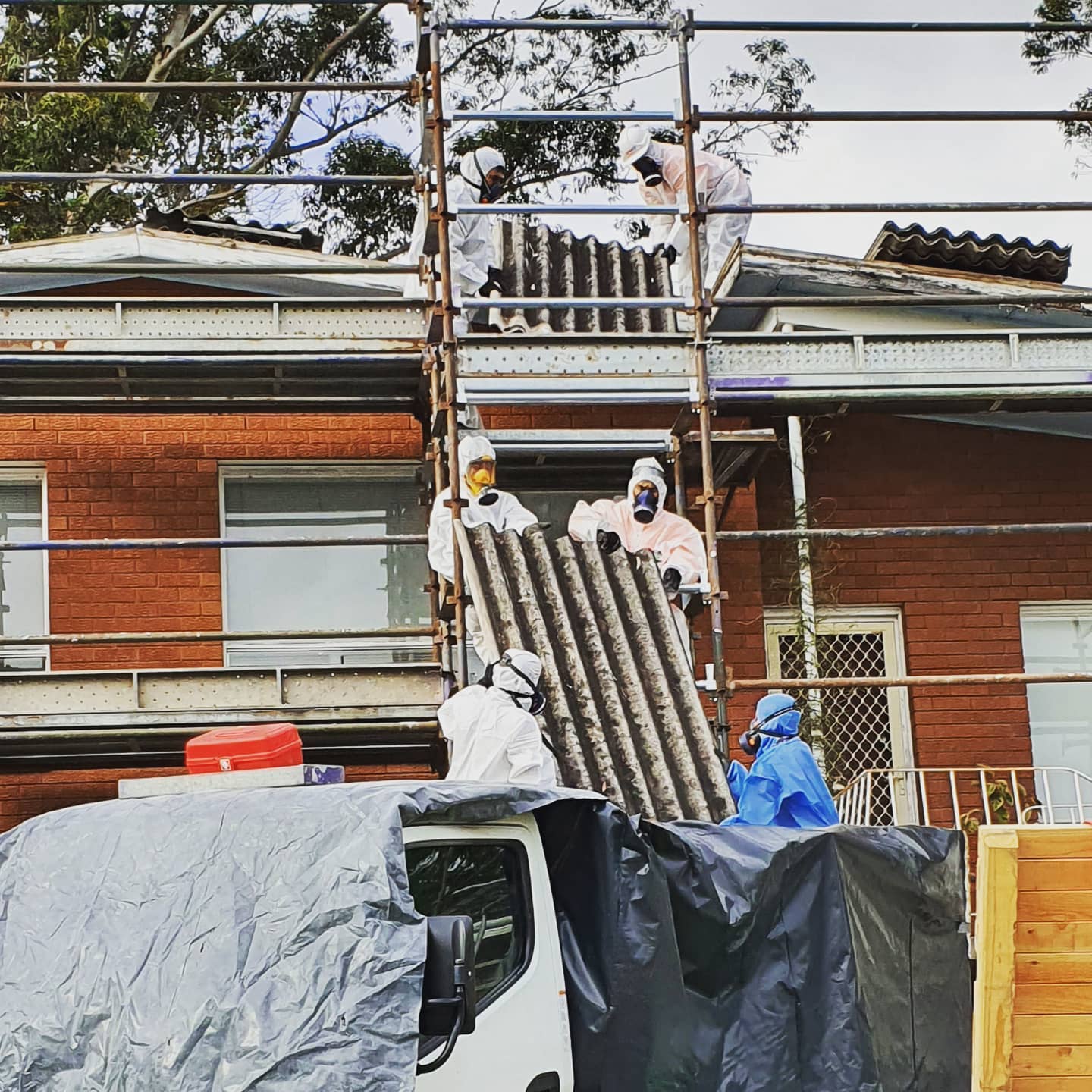
How Rosemont Removes an Asbestos Fence
Every fence removal we run includes:
Site inspection
We check the fence type, length, condition and access for the truck.
Quote and scope
We confirm whether testing is needed, the removal day, and any restoration work you want included.
Controlled removal
Sheets are wet down, removed whole where possible, and wrapped in heavy plastic. No high pressure cutting, no power tools that create dust.
Licensed disposal
All material is transported in a sealed load to a licensed asbestos disposal facility. We keep the tip docket on file for your records.
Site clean and visual check
The posts, footings and ground are inspected for fragments and cleaned before we leave.
Optional clearance certificate
A clearance is not legally required for most bonded fence jobs but is recommended if you are selling the property, dealing with insurance, or planning to landscape the boundary.
Fence Replacement After Removal
Most homeowners replacing a fence do not want to manage two separate trades. Rosemont’s carpentry team can handle the new fence installation after the asbestos work, including timber paling, hardwood, lapped and capped, or framing for a Colorbond install. That keeps the removal, disposal and rebuild on one quote, one schedule and one point of contact.
We service Sydney Metro, the Northern Beaches, Central Coast, Wollongong, the Blue Mountains and Western Sydney. Site inspections are free and quotes are fixed and written. Call 0475 000 021 or get a free quote online. All enquiries answered within 24 hours.
Asbestos Fence Removal FAQs
How do I know if my fence is asbestos?
Look for grey cement sheets, around 4mm to 6mm thick, bolted between timber or concrete posts on a fence older than 30 years. If the sheets ring when tapped and show fine fibres on a broken edge, treat it as suspected asbestos until tested. Do not break, drill or pressure wash the fence in the meantime.
Can I remove a small asbestos fence myself?
Legally, you can remove up to 10 square metres of bonded asbestos in NSW without a licence, but you still need to follow SafeWork NSW handling rules, wear the right PPE, and dispose of the waste at a licensed facility. Most homeowners find it cheaper and safer to hire a licensed contractor when the cost of PPE, transport and disposal is added up.
What does asbestos fence removal cost?
Cost depends on the fence length, sheet condition, site access, disposal distance and whether you want a clearance certificate or a replacement fence included. We provide a fixed written quote after a site inspection so there are no surprises on the day.
Will you dispose of the asbestos waste?
Yes. All asbestos waste removed by Rosemont is transported in a sealed load to a licensed waste facility, and we keep the tip docket on file. You do not handle disposal or paperwork.
Do I need a clearance certificate for fence removal?
Not always. Clearance certificates are legally required for friable asbestos removal and for most large bonded jobs, but most domestic fence jobs do not strictly require one. We recommend a clearance if you are selling the property, refinancing or planning to landscape the boundary so there is a documented record of safe removal.