
We are compliant with all standards and regulations set by the Australian Government, our team is fully licensed and insured.
Asbestos Air Monitoring Sydney
Rosemont Contractors specialises in safe, compliant asbestos air monitoring for residential, commercial, and industrial sites in Sydney.
With Rosemont Asbestos Air Monitoring, breathe easy
Welcome to Rosement Contractors Sydney! We are a team of highly trained professionals dedicated to helping you ensure the safety and health of your employees and others in your workplace or facility. Our asbestos air monitoring Sydney services are designed to help identify the presence of asbestos fibres in the air and provide you with the information you need in order to take timely and effective remedial actions. Whether you are concerned about potential asbestos exposure in your workplace or are required to comply with occupational health and safety regulations, we can help.
Because asbestos is imperceptible, it isn’t easy to detect airborne asbestos without professional equipment – nor would you want to! It is essential to monitor the air quality to ensure that there is no airborne asbestos exposure before, during, and after asbestos removal. It is one of the services that our team does best, so you can confidently breathe in safe air.
What is Asbestos Air Monitoring?
A test for respirable asbestos fibres is conducted during asbestos work to assess asbestos exposure and control measures. Asbestos-containing products may release asbestos fibres into the air when they are in poor condition, or when asbestos-containing materials are removed. Asbestos is presumed to be present in all fibres exhibiting specific geometric characteristics under a phase contrast microscope. To confirm its chemical composition, it may be necessary to run transmission electron microscopy testing on the asbestos air monitoring in NSW.
Monitoring of asbestos-containing air
To assess and ensure the effectiveness of asbestos control measures, asbestos monitoring is performed to remove friable and non-friable asbestos-containing materials. Air monitoring may be performed during asbestos removal to detect asbestos fibres outside the asbestos removal or to check if the area is safe for reoccupation after asbestos removal.
We use counters and signatories approved by our NATA-accredited asbestos laboratory for air monitoring. A Rosemont Contractors consultant can also perform asbestos inspections. Analyzing air samples determines whether asbestos fibres are present.
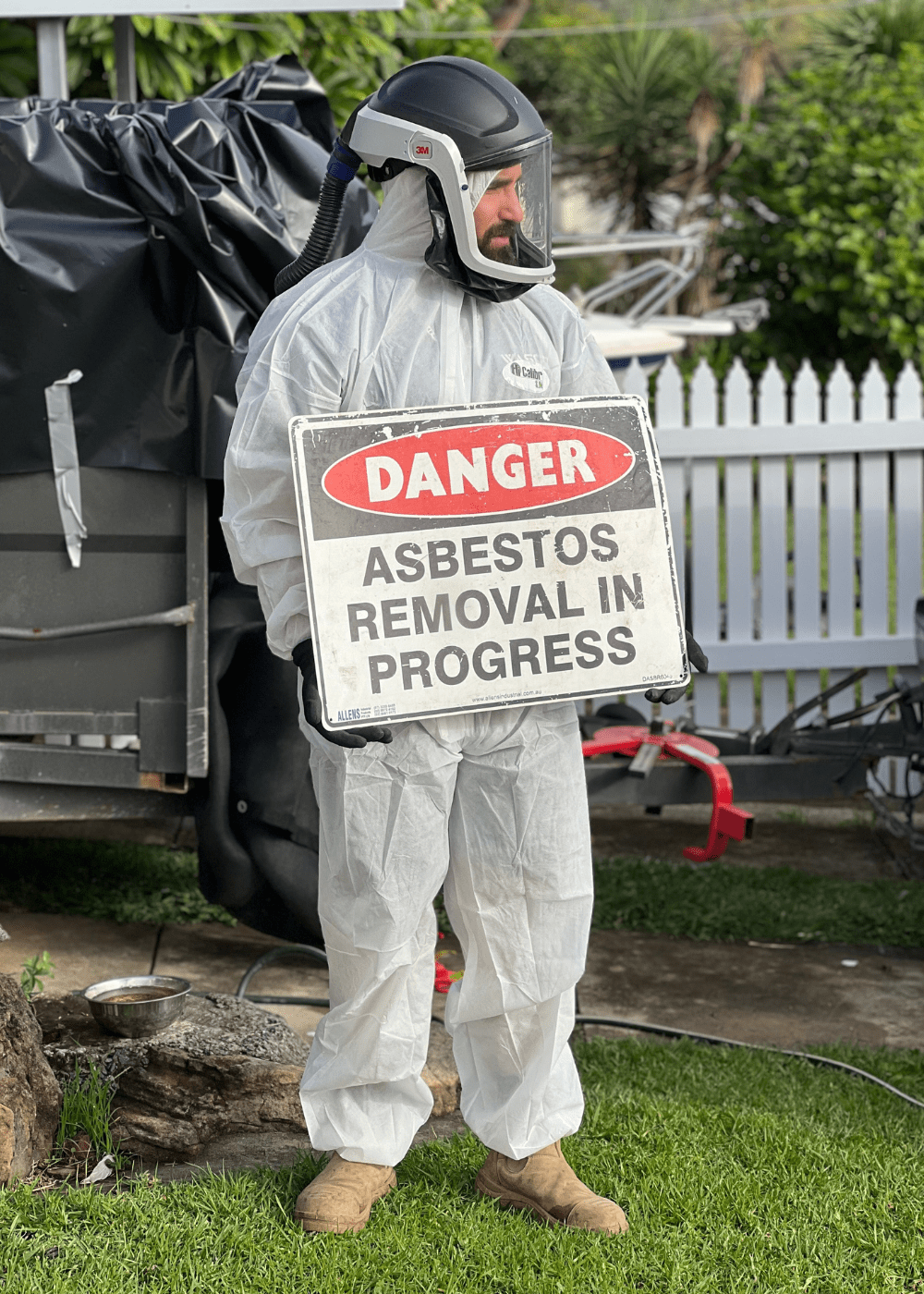
Our Asbestos Services
Our Asbestos check Sydney services include:
Air monitoring
We use state-of-the-art equipment to measure the levels of asbestos fibres in the air and provide you with accurate and reliable results.Air monitoring is performed during and after asbestos removal.
Risk assessments
We can help you assess the potential risks of asbestos exposure in your workplace and provide recommendations for controlling and minimizing those risks.
Exposure evaluations
If you have concerns about potential asbestos exposure, we can help you evaluate the level of risk and provide recommendations for protecting your employees and others from exposure.
Compliance assistance
If you are required to comply with occupational health and safety regulations related to asbestos, we can help you understand your obligations and ensure that you comply.
Our Air Monitoring Process
Whether you are located in Sydney or NSW, our asbestos air monitoring consultants can help you.
Background Monitoring
Two situations commonly require background air monitoring. When asbestos-containing materials are being worked on, air monitoring helps identify other fibres present in the materials. Asbestos-containing materials can also be assessed via background air monitoring if they are suspected of being damaged. Background air monitoring is generally performed with visual inspections of the subject area.
Risk assessments
Repeated Asbestos air sampling of air quality will quantify what exposure an individual has to airborne asbestos. When asbestos is present in an occupational environment regularly, airborne fibres are sampled and measured. When the pumps are run in the background, they will provide a good reading without interfering with everyday activities. Furthermore, a filter holder can be attached to the worker’s clothing. Asbestos fibre exposure can be tallied using this method. The results are then compared to the national exposure standard to determine if the exposure levels are within acceptable limits.
Control Monitoring
To assess their effectiveness, monitoring of asbestos control measures during work on asbestos-containing materials is essential. The asbestos control monitoring method measures the level of asbestos fibres in the air at fixed locations, generally one metre above the floor level.
Containment measures are monitored during removal by control monitoring measures. The results are not recommended to be interpreted as indicative of occupational exposure. Unlike exposure monitoring, these results cannot be compared with the national exposure standard.
Clearance Monitoring
After asbestos-containing materials have been decontaminated and dried, clearance monitoring is conducted. The number of asbestos fibres per litre of air must be less than 0.01. Occupational hygienists rely heavily on clearance monitoring for clearance inspections and safe area declarations.Clearance monitoring results are included in your asbestos clearance certificate.
Frequently Asked Questions
What is asbestos air monitoring?
Asbestos air monitoring measures the level of respirable asbestos fibres in the air at a site. Air is drawn through a filter over a set period, then a NATA accredited analyst examines the filter under a microscope to count fibres. It confirms whether the air is safe to breathe before, during, and after asbestos work.
When is air monitoring required?
Air monitoring is carried out during and after asbestos removal, and on any project involving friable asbestos. It is also used to check that control measures are working while materials are disturbed, and to confirm an area is safe to reoccupy once work is finished.
How long does monitoring take?
Sampling time depends on the size of the area and the type of monitoring. Background and clearance samples are usually collected on the day of the visit, and laboratory analysis of the filters follows shortly after. We confirm timing for your site when you book.
What happens if fibre levels are too high?
If results show fibre levels above the safe limit, the area is not cleared for reoccupation. The work zone stays sealed, further cleaning and decontamination are carried out, and air is sampled again until levels fall within the accepted standard.