

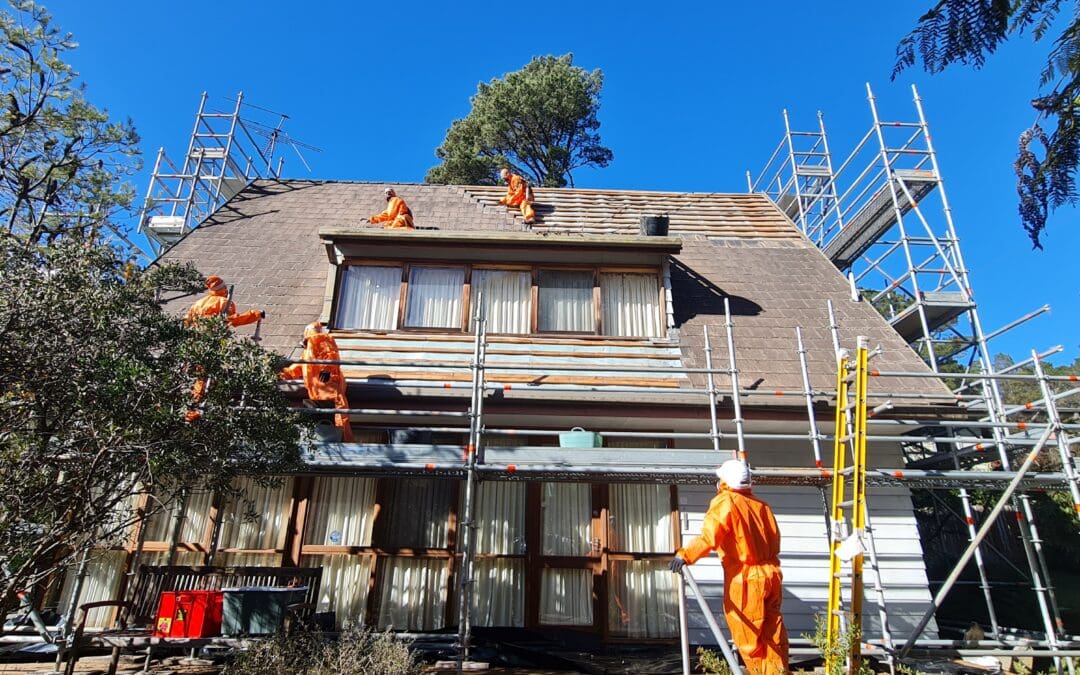
When most people think about asbestos in the home, they picture fibro walls or a cement roof. And they are right. Those are the most common locations. But asbestos was used in over 3,000 building products in Australia, and many of them ended up in places that do not look like asbestos at all.
This is where problems start. A homeowner orders an asbestos inspection, the inspector checks the obvious locations, gives the all-clear on the walls and roof, and the renovation begins. Then someone pulls up the vinyl flooring and finds asbestos backing underneath. Or a plumber cuts into a pipe and discovers asbestos lagging inside the wall cavity.
These are not rare scenarios. They happen on renovation sites across Sydney every week. And they happen because some asbestos-containing materials are easy to overlook unless you know exactly where to look.
Here are seven locations where asbestos commonly hides in Sydney homes, and why they get missed.
1. Behind Bathroom and Kitchen Tiles
This is one of the most frequently missed locations. In homes built between the 1940s and 1980s, asbestos cement sheeting was commonly used as a water-resistant backing board behind tiles in bathrooms, kitchens, and laundries.
The problem is that you cannot see the backing board during a standard visual inspection. It is hidden behind layers of tiles, adhesive, and sometimes additional waterproofing. An inspector can note the age of the home and the likelihood of asbestos behind tiles, but confirming it requires either destructive sampling (removing a tile to access the substrate) or waiting until the renovation exposes it.
Many inspections flag this as “presumed asbestos containing material” based on the building age. If your inspection report uses that language for your wet areas, treat it seriously. Do not let a tiler start ripping out tiles without a plan for what might be behind them.
2. Vinyl Flooring and the Backing Underneath
Vinyl floor tiles manufactured before the mid-1980s often contained asbestos in the tile itself. But even when the tiles are asbestos-free, the backing material (a black, tar-like adhesive or paper-based underlay) frequently contains asbestos fibres.
This catches people out because they test the visible tile, get a clean result, and assume the entire floor is safe. The backing material is a separate product and needs to be tested separately. When vinyl tiles are pulled up, the adhesive residue left on the concrete slab can also contain asbestos.
If your Sydney home has original vinyl flooring from the pre-2003 era, do not scrape, sand, or grind it without testing both the tile and the adhesive. A professional asbestos test should cover all layers, not just the surface.
3. Window Putty and Glazing Compounds
Asbestos was added to window putty and glazing compounds to improve their durability and fire resistance. This is one of the most overlooked asbestos sources in older homes because window putty does not look or feel like a typical asbestos product.
When windows are replaced during a renovation, the old putty is chiselled out or scraped away. If it contains asbestos, this process releases fibres directly into the work area. In most cases, the person doing the work has no idea they are handling an asbestos-containing material.
Homes with original timber-framed windows from the 1950s to 1970s are the most likely to have asbestos in the glazing compound. If you are replacing windows in a home from this era, have the putty sampled before removal.
4. Electrical Meter Boards and Switchboard Backing
Asbestos cement board was widely used as the backing material for electrical meter boards and switchboards in NSW homes built before the 1980s. The material was chosen for its fire-resistant properties.
This location gets missed because homeowners (and sometimes inspectors) do not think to check electrical infrastructure. The meter board is often located on an external wall, partially concealed by a metal cover. Opening the cover reveals the asbestos cement backing, but many visual inspections skip this step.
If you are upgrading your switchboard or having electrical work done, the electrician needs to know whether the backing is asbestos before they start drilling or cutting into it. A quick test can confirm either way.
5. Pipe Lagging and Insulation Inside Wall Cavities
Asbestos was used to insulate hot water pipes, heating ducts, and flue pipes in many older homes. This insulation, known as pipe lagging, is often hidden inside wall cavities, under floors, or in roof spaces where it is not visible during a standard walkthrough.
Pipe lagging is particularly concerning because it is often friable, meaning the asbestos fibres are loosely bound and can become airborne with minimal disturbance. If a plumber cuts into a pipe without knowing there is asbestos lagging wrapped around it, the exposure risk is immediate.
A thorough asbestos inspection should include checking accessible pipe runs in subfloor spaces, roof cavities, and service corridors. If pipes are concealed inside walls and the home is from the right era, the report should flag the possibility even if direct access is not available.
6. Textured and Decorative Ceiling Coatings
Some textured ceiling coatings applied before the mid-1980s contain asbestos. These products were sprayed or trowelled onto ceilings to create a decorative pattern. They look like standard plaster or render, and most homeowners would never suspect they contain asbestos.
The risk here is during sanding or scraping. Homeowners preparing ceilings for repainting sometimes sand back the textured coating to create a smooth surface. If the coating contains asbestos, sanding it releases a large volume of fibres into the air.
If your home has textured ceilings and was built or renovated before the mid-1980s, do not sand, scrape, or water-blast the coating without testing it first.
7. Roof Cavity Dust and Debris
Even if the roof sheets themselves are not asbestos, the dust and debris that accumulates in roof cavities over decades can contain asbestos fibres. This happens when asbestos materials elsewhere in the home (or in neighbouring properties) deteriorate and release fibres that settle in the roof space.
In some cases, loose-fill asbestos insulation was deliberately installed in roof cavities. This was most common in the ACT (“Mr Fluffy” insulation) but isolated cases have been found in NSW as well.
Roof cavity dust is often disturbed during electrical work, insulation upgrades, or when homeowners go into the roof space to store belongings. If you have not had your roof cavity inspected and your home predates 2003, it is worth including in your next assessment.
Why These Locations Get Missed
There are a few common reasons these asbestos locations slip through inspections.
Some inspectors only check the visible, accessible materials: walls, ceilings, eaves, and roofing. They do not open switchboards, lift vinyl tiles, or climb into tight subfloor spaces. The report comes back with the obvious items noted, but the hidden ones are not mentioned.
Other times, the inspection is limited by access. If a bathroom has been recently tiled over, the inspector cannot see the backing board without removing a tile. In these cases, the report should note the limitation and flag the area as “presumed” based on the building age. If it does not, that is a gap in the assessment.
The best inspections are thorough, systematic, and honest about what they can and cannot access. They document every suspect material, flag presumed locations, and recommend testing for anything uncertain.
What You Can Do About It
If you are planning a renovation on a pre-2003 Sydney home, ask your inspector to check beyond the obvious locations. Specifically request that they assess wet area substrates, vinyl flooring and adhesive layers, window putty on timber-framed windows, electrical meter board backing, accessible pipe runs in subfloors and roof spaces, textured ceiling coatings, and roof cavity dust.
A comprehensive inspection that covers these areas costs more than a basic walkthrough, but it prevents the kind of mid-renovation discovery that stops your project cold.
If asbestos is found, a licensed contractor handles the removal. Once removal is complete, the gaps left behind (walls, linings, eaves, ceilings) need to be rebuilt. Rosemont Contractors handles both asbestos removal and the carpentry restoration that follows, so your project keeps moving without the delay of finding a second contractor.
Book a Thorough Inspection
Rosemont Contractors provides detailed asbestos inspections that go beyond the surface across Sydney, the Northern Beaches, Central Coast, and Wollongong. We check the places others miss. Get in touch for a free quote.