
Asbestos regulations in NSW are not suggestions. They are laws with real penalties for homeowners and contractors who ignore them. And yet, most Sydney homeowners who start a renovation have no idea what the rules actually require.
This matters because ignorance is not a defence. If you disturb asbestos without following the correct procedures, you can face fines, stop-work orders, cleanup costs, and potential health consequences for your family and neighbours. The rules exist to protect people, but they only work if you know what they say.
Here is a plain-language breakdown of the key NSW asbestos laws that apply to residential renovations.
The Core Legislation
Asbestos management in NSW falls under several pieces of legislation that work together. The main ones homeowners need to know about are the Work Health and Safety Act 2011, the Work Health and Safety Regulation 2017, and the Protection of the Environment Operations Act 1997.
SafeWork NSW is the primary regulator for workplace health and safety, which includes any renovation or construction work. The NSW Environment Protection Authority (EPA) handles the waste and disposal side.
Together, these agencies enforce the rules on how asbestos must be identified, removed, transported, and disposed of. The penalties for non-compliance are significant for both individuals and businesses.
The Pre-Renovation Duty
If you are engaging a contractor to do renovation or demolition work on a home built before 2003, there is a duty to identify whether asbestos is present before work begins. Under the Work Health and Safety Regulation 2017, a person conducting a business or undertaking (PCBU), which includes your builder or contractor, must not carry out demolition or refurbishment work on a structure built before 2004 unless the structure has been assessed for asbestos.
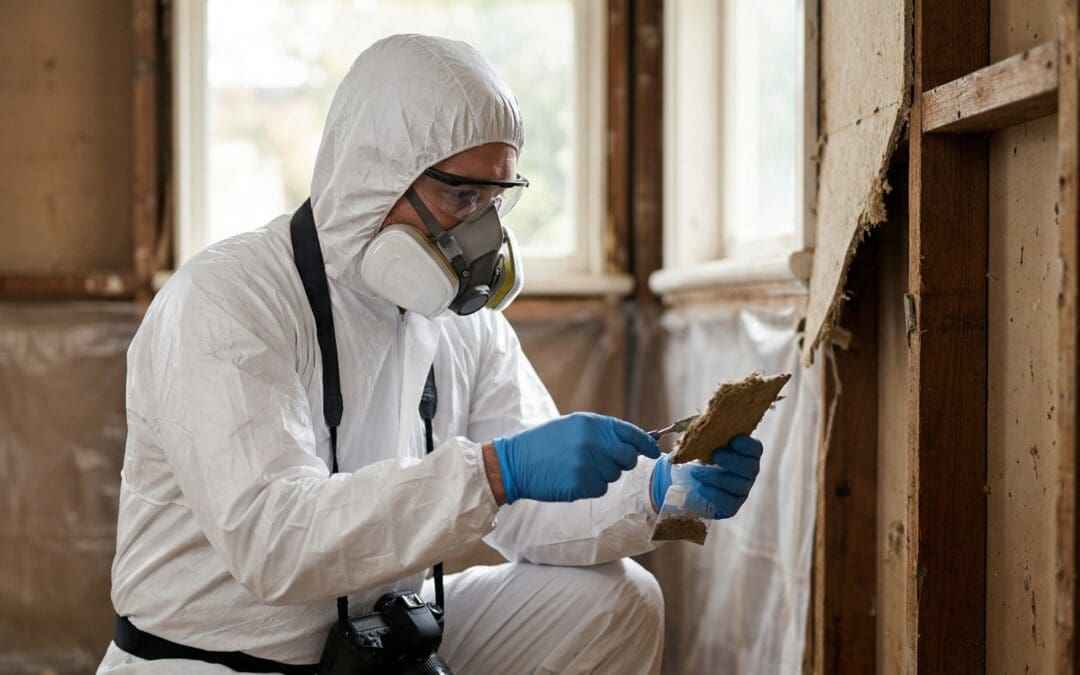
In practical terms, this means your builder should be asking about asbestos before they start. If they do not, that is a red flag. A professional asbestos inspection should be completed before any work begins.
For homeowners doing their own work, this legal duty does not apply in the same way (the WHS Act primarily covers workplaces and PCBUs). But the practical and health risks are identical. Getting a professional assessment before you start is the safest approach regardless of who is doing the work.
The 10 Square Metre Rule for DIY
NSW allows homeowners to remove less than 10 square metres of non-friable (bonded) asbestos from their own residential property without a licence. This is one of the most widely known asbestos rules in the state, and one of the most misunderstood.
Here is what the rule actually says, and what it does not.
You can remove less than 10 square metres of bonded asbestos from your own home. You must wet the material to prevent dust, avoid breaking or cutting it, double-wrap it in 200-micron plastic, label it clearly as asbestos waste, and dispose of it at a facility licensed to accept asbestos.
You cannot remove friable asbestos under any circumstances. That requires a Class A licensed contractor. You cannot remove more than 10 square metres, even if it is all non-friable. You cannot use power tools on asbestos materials. You cannot hire an unlicensed person to do it for you.
The 10 square metre limit is cumulative. If you remove 5 square metres this month and 6 square metres next month, you have exceeded the limit. Some homeowners try to work around this by doing small removals over time, but the regulation does not allow that.
Many experienced contractors, including our team, recommend against DIY removal even within the legal limit. The risk of accidental fibre release, improper disposal, and cross-contamination of your home is real. The cost of having a professional handle a small job is often far less than the cost of a contamination cleanup.
Licencing Requirements
Any asbestos removal work beyond the DIY threshold must be carried out by a licensed contractor.
NSW uses a two-tier licensing system. A Class B licence allows the removal of non-friable (bonded) asbestos only. A Class A licence allows the removal of both friable and non-friable asbestos. Class A is the highest licence class and requires more stringent safety management systems, training, and equipment.
Before hiring any contractor, check their licence on the SafeWork NSW licence verification portal. Every licensed removalist has a licence number that you can look up. Rosemont Contractors holds asbestos removal licence AD213403, which you can verify directly with SafeWork NSW.
Hiring an unlicensed removalist is illegal. It also means the work is uninsured, unregulated, and potentially unsafe. If something goes wrong, you have no recourse.
Notification Requirements
For certain types of asbestos removal work, SafeWork NSW must be notified before the job begins.
The licensed removalist must notify SafeWork NSW at least five calendar days before removing any amount of friable asbestos or more than 10 square metres of non-friable asbestos. The contractor must also follow all safety requirements under the Code of Practice.
The notification for friable work must include the location, the type and quantity of asbestos, the removal method, the control measures, and the name of the licensed assessor who will conduct the clearance inspection.
Clearance Certificates
After asbestos removal is complete, an independent licensed assessor must inspect the area and issue an asbestos clearance certificate before the site can be reoccupied or any further work can proceed.
This is a legal requirement, not an optional step. The clearance certificate confirms that the removal was completed properly and that the area is safe. Without it, no builder, electrician, plumber, or other trade should be entering the work area.
The assessor who issues the clearance certificate must be independent from the removal contractor. This separation exists to prevent conflicts of interest and to give homeowners confidence that the inspection is objective.
Disposal and Transport
Asbestos waste must be transported and disposed of in accordance with the Protection of the Environment Operations Act 1997 and the associated waste regulations.
The material must be double-wrapped in heavy-duty plastic (minimum 200 microns), clearly labelled with asbestos warning signs, transported in a covered and secure vehicle, and taken to a waste facility licensed to accept asbestos.
From 2027 the NSW Government plans to trial free pick-up and disposal of smaller amounts of household asbestos waste. The detailed rules have not been released yet. The announcement covers collection and disposal, not professional removal. Our guide to the NSW free asbestos collection trial sets out what has been announced so far.
In metropolitan Sydney, asbestos disposal attracts the NSW waste levy, which is charged per tonne. The levy rate is set by the EPA and is updated periodically.
Illegal dumping of asbestos carries severe penalties. Individuals can face fines exceeding $1 million, and corporations can face fines exceeding $5 million under the Protection of the Environment Operations Act. The EPA actively investigates and prosecutes illegal dumping, particularly in Western Sydney and regional areas where dumping has been a persistent problem.
Asbestos Management Plans
Under the Work Health and Safety Regulation 2017, commercial and industrial buildings are required to have an asbestos management plan if asbestos is present. This plan must document the location, type, and condition of asbestos materials and outline how they will be managed over time.
Residential properties do not have the same legal requirement for a formal management plan. However, if you know asbestos is present in your home, having a written record of its location and condition is a smart move. It protects you during future renovations, helps with property sales (asbestos disclosure is expected as part of the conveyancing process), and gives contractors the information they need to work safely.
Penalties for Non-Compliance
The penalties for breaching asbestos laws in NSW are not token fines. SafeWork NSW has the power to issue improvement notices (requiring corrective action within a set timeframe), prohibition notices (immediately stopping work until the issue is resolved), and on-the-spot fines for specific breaches.
For more serious offences, criminal prosecution is possible under the WHS Act. Category 1 offences (reckless conduct creating a risk of death or serious injury) carry maximum penalties of $3 million for corporations and $600,000 or five years’ imprisonment for individuals.
The EPA also issues penalties for waste-related offences, including illegal transport and dumping of asbestos materials.
What This Means for Your Renovation
If you are renovating a pre-2003 home in Sydney, the regulatory framework is clear. Get an asbestos assessment before work begins. If asbestos is found, use a licensed contractor with a verified licence number. After removal, obtain a clearance certificate from an independent assessor. Dispose of waste at a licensed facility.
Following these steps is not just about avoiding fines. It is about keeping your family, your neighbours, and your contractors safe.
Rosemont Contractors is licensed for asbestos removal (AD213403) and carpentry (398318C). We handle the full process: inspection, testing, removal, clearance, and restoration so you stay compliant at every stage. Contact us for a free quote.