
Most homeowners who hear the word “asbestos” think of one thing: danger. And they are right to take it seriously. But not all asbestos is equally dangerous, and understanding the difference between friable and non-friable asbestos can change how you approach your renovation, your budget, and your safety plan.
This distinction is not just a technical detail. It determines which licence a contractor needs, what safety controls are required, how much the removal costs, and how urgently the material needs to be dealt with. Getting it wrong can put your family at risk. Getting it right can save you thousands of dollars and weeks of unnecessary stress.
What Makes Asbestos Dangerous in the First Place
Asbestos itself is not dangerous when it is sitting undisturbed in a wall or roof. The risk comes from fibres. Asbestos is made up of microscopic fibres that are so small you cannot see them with the naked eye. When these fibres become airborne, they can be inhaled deep into the lungs where the body cannot break them down or expel them.
Over time, trapped fibres can cause serious diseases including asbestosis (scarring of the lung tissue), lung cancer, and mesothelioma (a cancer of the lining around the lungs or abdomen). These diseases often take 20 to 40 years to develop after exposure, which is why many people who were exposed decades ago are only now being diagnosed.
The key question with any asbestos material is: how easily can it release fibres? That is exactly what the friable vs non-friable classification answers.
Non-Friable Asbestos (Bonded)
Non-friable asbestos, also called bonded asbestos, is the most common type found in Sydney homes. The asbestos fibres are mixed into a binding material, usually cement, and locked in place. You cannot crumble it with your hands under normal conditions.
Where It Appears
Non-friable asbestos shows up in a wide range of building products used across Australia from the 1940s through to 2003. The most common include flat and corrugated cement sheeting (the “fibro” that gave fibro homes their name), roofing tiles and shingles, eaves and soffits, fencing panels, vinyl floor tiles and the backing material underneath them, water and drainage pipes, and electrical meter boards.
Risk Level
When non-friable asbestos is in good condition and left undisturbed, the risk of fibre release is low. The cement matrix holds the fibres in place. The danger increases when the material is cut, drilled, sanded, broken, or allowed to deteriorate through weathering. A fibro fence that has been standing for 40 years and is cracking, flaking, and falling apart is a very different risk profile than one that is still solid.
Removal Requirements
In NSW, non-friable asbestos can be removed by a contractor holding a Class B asbestos removal licence. The work requires proper safety controls including PPE, wet removal methods, and correct waste packaging, but it does not require the full containment setups needed for friable work.
Under SafeWork NSW regulations, homeowners can legally remove up to 10 square metres of non-friable asbestos from their own residential property without a licence. However, just because it is legal does not mean it is safe or advisable. Improper handling, even of bonded materials, can release fibres and contaminate your home.
Friable Asbestos
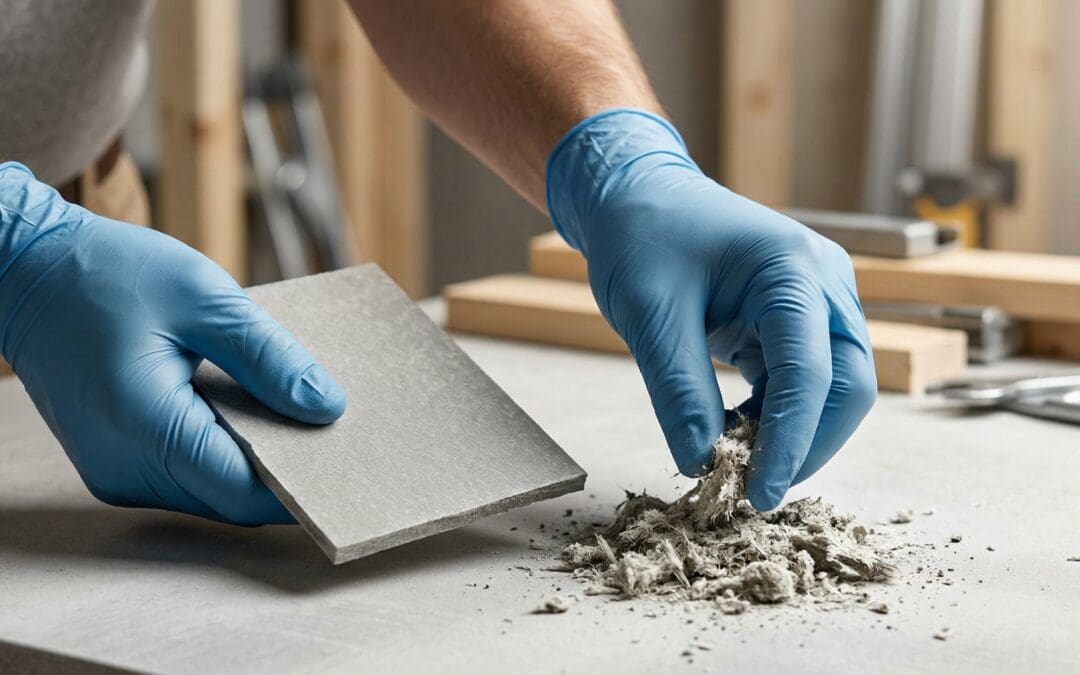
Friable asbestos is a different situation entirely. A material is classified as friable if it can be crumbled, pulverised, or reduced to powder by hand pressure when dry. This means the asbestos fibres are loosely bound or not bound at all, making them far easier to become airborne.
Where It Appears
Friable asbestos is less common in standard residential construction but is found in older homes and commercial buildings. Common locations include pipe lagging and insulation wrapping, spray-on insulation coatings (often found in roof spaces and commercial ceilings), loose-fill insulation (particularly the “Mr Fluffy” products used in ACT and some NSW homes), gaskets, rope seals, and woven asbestos products, and severely degraded non-friable products that have broken down to the point where they crumble.
That last point is worth highlighting. Non-friable asbestos can become friable over time. A cement sheet that has been weathered, fire-damaged, or physically broken down may reach a state where it crumbles easily. At that point, it is reclassified as friable and must be treated accordingly.
Risk Level
Friable asbestos poses a significantly higher health risk because fibres can become airborne with very little disturbance. Even walking through a roof space with deteriorating spray-on insulation can release enough fibres to cause exposure. Friable materials require immediate professional assessment and should never be touched, swept, or vacuumed by an unlicensed person.
Removal Requirements
Friable asbestos removal requires a Class A asbestos removal licence, which is the highest classification in NSW. The removal process involves full containment enclosures (sealed plastic sheeting around the work area), negative air pressure units to prevent fibres escaping, continuous asbestos air monitoring throughout the work, decontamination showers for workers exiting the containment zone, independent clearance inspection and certificate before the area is reopened.
SafeWork NSW must be notified at least five days before any friable asbestos removal work begins. The notification requirements, safety controls, and disposal procedures are all more stringent than for non-friable work.
Why This Distinction Matters for Your Renovation
If you are planning a renovation on a pre-2003 Sydney home, the friable vs non-friable classification directly affects three things.
Your Budget
Non-friable removal is less expensive because the safety controls, equipment, and labour requirements are simpler. Friable removal costs significantly more due to containment setups, air monitoring, and the extended time needed for safe removal. Knowing what type of asbestos you have before you start budgeting prevents cost blowouts.
Your Timeline
Non-friable removal can often be completed in a day or two for smaller residential jobs. Friable removal takes longer due to setup, containment, monitoring, and clearance requirements. A friable job that was expected to take one day can stretch to a week or more when full containment is required.
Your Contractor
Not every asbestos removal contractor holds a Class A licence. Many residential removalists only carry a Class B licence, which means they can only handle non-friable materials. If your asbestos inspection identifies friable materials, you need a contractor with the correct licence class. Hiring a Class B contractor for friable work is illegal and dangerous.
How to Find Out What You Have
You cannot tell whether asbestos is friable or non-friable just by looking at it. A cement sheet might look solid but could be degraded enough to crumble. Pipe lagging might look like regular insulation but could contain asbestos fibres.
The only reliable way to determine what you are dealing with is professional asbestos testing. A licensed assessor takes samples of suspect materials and sends them to a NATA-accredited laboratory for analysis. The lab results confirm whether asbestos is present, what type of asbestos it is (chrysotile, amosite, or crocidolite), and whether the material is in a friable or non-friable state.
This information feeds directly into your removal plan, your quote, and your safety controls. Without it, you are guessing. And guessing with asbestos is not a risk worth taking.
What Comes After Removal
Regardless of whether your asbestos is friable or non-friable, the removal process leaves behind gaps in your home. Walls, ceilings, eaves, and linings that once contained asbestos need to be replaced with new materials. This restoration phase is where many projects stall, because most asbestos removalists do not offer carpentry services.
Rosemont Contractors holds both an asbestos removal licence (AD213403) and a carpentry licence (398318C). That means we handle the full process from removal through to carpentry restoration without handing you off to a second contractor.
Get a Professional Assessment
If you are unsure whether your home contains friable or non-friable asbestos, do not guess. Rosemont Contractors provides professional asbestos inspections and NATA-certified testing across Sydney, the Northern Beaches, Central Coast, and Wollongong. Contact us for a free quote.