

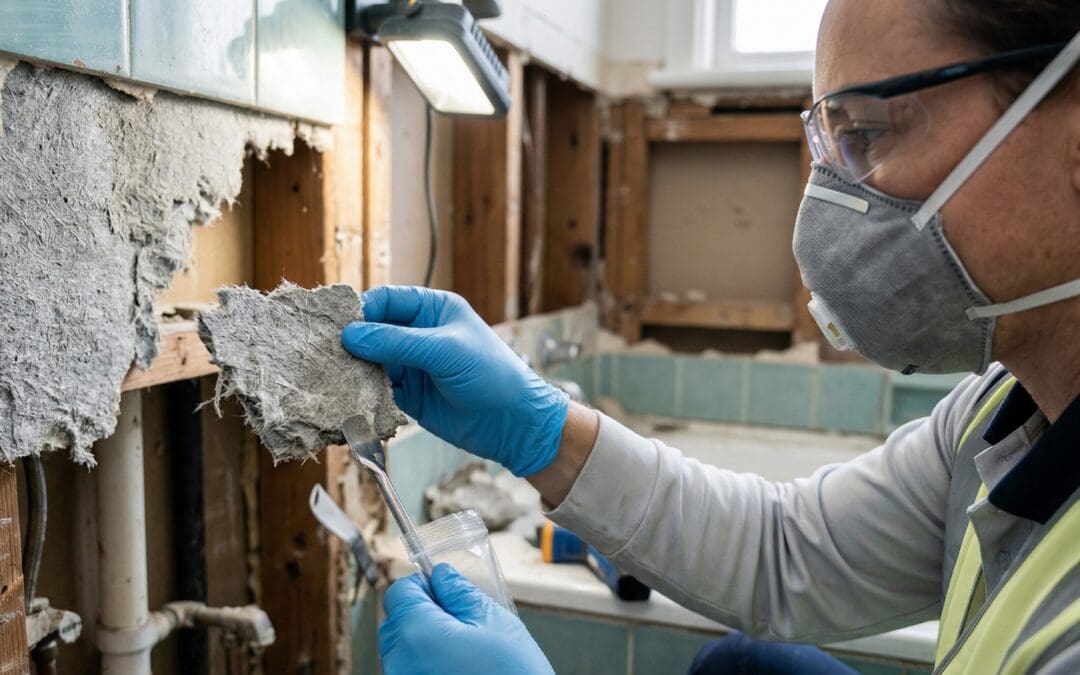
If you own a home in Sydney that was built before 2003, there is a strong chance asbestos is somewhere in your property. That is not a scare tactic. It is a fact backed by decades of building industry data.
Australia was one of the world’s largest consumers of asbestos products during the 20th century. More than 3,000 products contained asbestos, and a huge number of those ended up in residential homes across Sydney. The material was cheap, fire resistant, and easy to work with. Builders loved it. Homeowners had no idea what they were living with.
So how many Sydney homes still contain asbestos today? And what does that mean for you if you are planning a renovation?
Australia’s Asbestos History by the Numbers
Australia banned the import, manufacture, and use of all asbestos products on 31 December 2003. But the ban only stopped new asbestos from entering homes. It did nothing to remove the millions of tonnes already installed.
The Australian Government’s Asbestos Safety and Eradication Agency (ASEA) has estimated that roughly one in three Australian homes still contains asbestos materials. In New South Wales alone, that figure is likely higher due to the density of post-war housing stock in greater Sydney.
Homes built between 1945 and 1987 are the most likely to contain asbestos. During this period, asbestos cement (commonly known as “fibro”) was the go-to material for wall sheeting, roofing, eaves, fencing, and bathroom linings. If your home falls within this construction era, the probability of asbestos being present is extremely high.
Homes built between 1987 and 2003 can still contain asbestos, but it tends to appear in fewer locations. Think vinyl flooring, pipe insulation, electrical backing boards, and window putty.
Homes built after 2003 should be asbestos free, though there have been isolated cases of imported materials slipping through.
What Does This Look Like Across Sydney?
Sydney’s suburban spread happened in waves, and each wave left behind a different asbestos footprint.
Inner West and Eastern Suburbs
Many homes in suburbs like Ashfield, Marrickville, Leichhardt, and Randwick were built between the 1920s and 1960s. These properties often contain asbestos in internal wall linings, ceiling sheets, and bathroom wet areas. Renovations in these suburbs frequently uncover asbestos hidden behind tiles and plasterboard.
Northern Beaches and North Shore
Suburbs like Manly, Dee Why, Forestville, and Hornsby saw significant development through the 1950s to 1970s. Fibro cladding, eaves, and garage linings are the most common asbestos locations in these areas. Many homeowners on the Northern Beaches only discover asbestos when they start pulling apart garages or outdoor structures.
Western Sydney and South West
Fairfield, Bankstown, Campbelltown, and Penrith experienced housing booms from the 1960s through the 1980s. These suburbs have some of the highest concentrations of fibro homes in the state. Asbestos fencing is also widespread in these areas, with many original dividing fences still standing.
Central Coast and Wollongong
Both regions experienced strong residential growth during the fibro era. Gosford, Woy Woy, and the northern suburbs of Wollongong have large volumes of asbestos-containing homes, particularly in roofing and external cladding.
Why So Much Asbestos Is Still in Place
You might wonder why, more than 20 years after the ban, so much asbestos remains in Sydney homes. There are a few reasons.
First, there is no law in NSW that requires homeowners to remove asbestos from their property. The regulations only apply when you disturb it. If asbestos materials are in good condition and left alone, they are considered low risk. The moment you drill into a wall, pull up flooring, or knock down a structure, everything changes.
Second, removal costs money. Depending on the scope, licensed asbestos removal can range from a few hundred dollars for a small section to several thousand for a full house. Many homeowners put it in the “deal with it later” pile.
Third, a lot of people simply do not know it is there. Asbestos cement looks like ordinary sheeting once it has been painted. Without professional testing, there is no way to confirm whether a material contains asbestos just by looking at it.
The Renovation Trigger
The biggest risk period for asbestos exposure is during home renovations. SafeWork NSW has repeatedly warned that DIY renovators are one of the highest exposure groups in the state. Cutting, sanding, drilling, or breaking asbestos materials releases microscopic fibres into the air. These fibres, once inhaled, can lodge in the lungs and remain there for decades.
This is why the pre-renovation asbestos check is so important. Before you touch anything in a home built before 2003, get it tested. A professional inspection takes a few hours and gives you a clear picture of what you are working with.
If asbestos is found, a licensed removalist handles the safe extraction. Once removal is complete, restoration work (replacing walls, eaves, ceilings, and linings) can begin. This is where most homeowners run into trouble: the removalist finishes, packs up, and leaves you with exposed framing. Finding a separate carpenter to come in and finish the job adds weeks of delay and extra cost.
That is exactly why Rosemont Contractors operates differently. We hold both an asbestos removal licence (AD213403) and a carpentry licence (398318C), which means we handle testing, removal, and full carpentry restoration as a single project. No handoff. No waiting for a second contractor.
What You Should Do Right Now
If your Sydney home was built before 2003 and you have not had an asbestos assessment, here is what to consider.
Do not assume you are safe because your home “looks fine.” Asbestos materials in good condition still need to be documented and managed, especially if you plan to sell or renovate in the future.
If you are about to start a renovation, get a professional inspection before any work begins. This is not optional under NSW regulations if you are engaging a builder or contractor. It is a legal requirement under the Work Health and Safety Regulation 2017.
If you already know asbestos is present, talk to a licensed removal contractor about your options. In some cases, encapsulation (sealing the material in place) may be appropriate. In others, full removal is the safest path.
The bottom line: with roughly one in three Australian homes still containing asbestos, and the figure likely higher across Sydney’s older suburbs, the question is not whether your home might have it. The question is whether you have checked.
Get Your Home Assessed
If you are planning a renovation, selling your property, or simply want peace of mind, Rosemont Contractors can help. We provide asbestos inspections, NATA-certified testing, licensed removal, and full carpentry restoration across Sydney, the Northern Beaches, Central Coast, and Wollongong. Get in touch for a free quote.