
When asbestos is found in a Sydney home, most homeowners assume removal is the only option. Strip it out, dispose of it, move on. But there is a second approach that is sometimes appropriate and sometimes not: encapsulation.
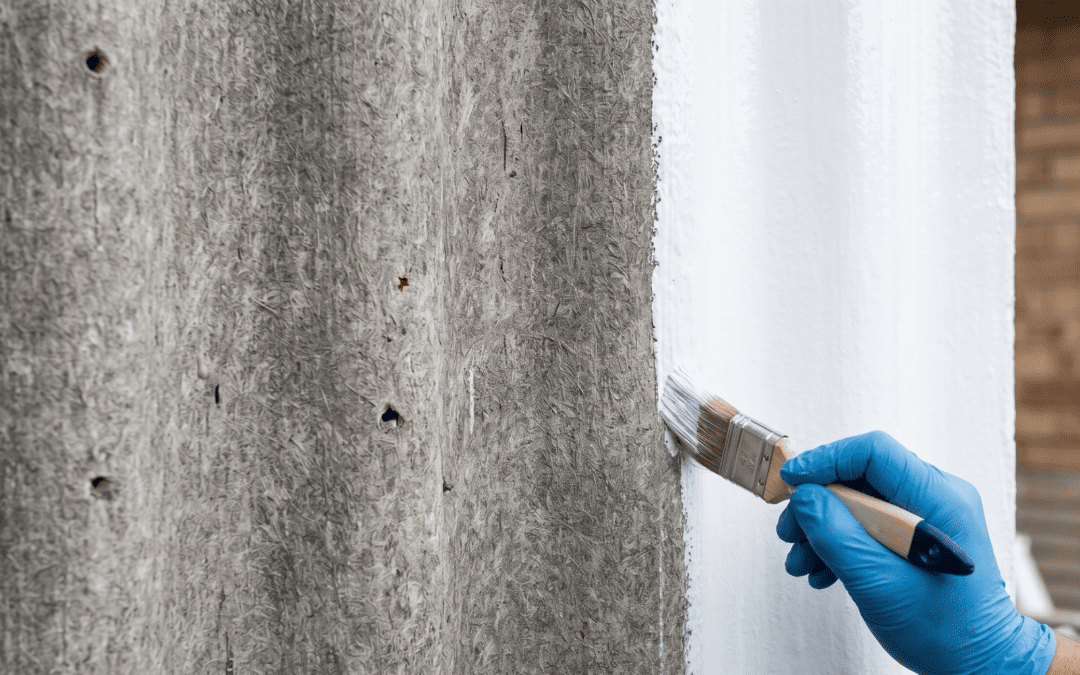
Encapsulation means sealing the asbestos material in place with a protective coating or barrier rather than physically removing it. The asbestos stays where it is, but the coating prevents fibre release.
On paper, this sounds like the easier, cheaper option. And in certain situations, it genuinely is. But encapsulation is not a universal solution, and using it in the wrong circumstances creates ongoing risk that removal would have eliminated permanently.
Here is when encapsulation makes sense, when it does not, and how to make the right call for your property.
How Encapsulation Works
Asbestos encapsulation involves applying a sealant or coating to the surface of asbestos-containing material to bind loose fibres and prevent them from becoming airborne. There are two main types.
Penetrating encapsulants soak into the material and bind the fibres within the matrix. They are used on porous asbestos products like insulation or spray-on coatings where the fibres are close to the surface.
Bridging encapsulants form a protective membrane or skin over the surface of the material. They are used on solid products like cement sheeting where the goal is to seal the outer face and prevent surface deterioration from releasing fibres.
In both cases, the encapsulant must be applied by a licensed contractor following the SafeWork NSW Code of Practice. The work requires proper PPE, containment where appropriate, and documentation.
When Encapsulation Makes Sense
Encapsulation is a legitimate option in specific circumstances. It is not a shortcut or a budget compromise. When used correctly, it provides effective protection.
Material in Good Condition
If the asbestos-containing material is intact, undamaged, and in a stable condition, encapsulation can be an appropriate way to manage it in place. A solid fibro wall that is not cracked, weathered, or deteriorating may be a candidate for sealing rather than removal.
The logic is straightforward: if the material is not releasing fibres and will not be disturbed, sealing it provides an additional layer of protection without the cost, disruption, and waste generation of removal.
Material in Low-Traffic or Inaccessible Areas
Asbestos in areas that are rarely accessed, not subject to physical contact, and not exposed to weather may be a good candidate for encapsulation. Roof cavity linings, concealed wall panels in storage areas, and high-level eaves that are not deteriorating are examples.
If the material will not be touched, bumped, drilled into, or exposed to degradation, encapsulation can manage the risk effectively.
Short-to-Medium Term Management
Sometimes encapsulation is used as an interim measure. A property owner may not be ready for a full renovation but wants to manage a known asbestos risk in the meantime. Encapsulation stabilises the material and buys time without committing to the full scope and cost of removal.
This is a legitimate strategy as long as the encapsulation is properly maintained and inspected periodically. It is not a “set and forget” solution.
Budget Constraints with a Clear Plan
Encapsulation costs less than removal because it does not involve demolition, waste packaging, waste transport, disposal levies, or restoration work. If budget is a constraint and the material qualifies, encapsulation can be a sensible first step with removal planned for a later date.
When Encapsulation Does NOT Make Sense
Here is where the approach gets misused. Encapsulation is sometimes recommended in situations where removal would be the safer and more practical choice. These are the red flags.
Material That Is Damaged or Deteriorating
If the asbestos-containing material is cracked, broken, weathered, water-damaged, or showing visible surface deterioration, encapsulation is a poor choice. The encapsulant needs a sound substrate to bond to. Applying a coating over crumbling material does not fix the underlying problem. It masks it.
Deteriorated asbestos is already releasing fibres. Sealing the surface may temporarily reduce fibre release, but the material continues to degrade underneath the coating. Over time, the encapsulant can crack or peel, exposing the deteriorated asbestos again.
In these situations, removal is the only way to permanently eliminate the risk.
Material That Will Be Disturbed
If you are planning a renovation that involves work in or around the encapsulated area, encapsulation is a waste of money. You cannot drill, cut, nail, or sand encapsulated asbestos. Any physical disturbance breaks the seal and releases fibres.
This happens more often than it should. A homeowner encapsulates their bathroom wall sheeting to save money, then decides to renovate the bathroom two years later. The encapsulated material now needs to be removed anyway, and the encapsulant makes the removal slightly more complex (depending on the product used).
If renovation is on the horizon, skip encapsulation and go straight to removal. You will spend less overall and eliminate the hazard permanently.
Friable Asbestos
Encapsulation of friable asbestos is a specialised process that requires careful assessment. Loose-fill insulation, degraded spray coatings, and crumbling pipe lagging are often too unstable for encapsulation to be effective. In many cases, the material needs to be removed entirely under full containment.
A licensed assessor should evaluate whether the friable material is suitable for encapsulation or whether removal is the safer option. Do not assume that because encapsulation is cheaper, it is always viable for friable materials.
When Selling the Property
Encapsulated asbestos must be disclosed during the property sale process. Buyers (and their inspectors) will identify the encapsulation, and it can affect the property’s perceived value. Some buyers will accept encapsulated asbestos if it is well-documented and in good condition. Others will use it as a negotiation lever or walk away entirely.
Removal eliminates the disclosure issue. Once asbestos is removed and a clearance certificate is issued, that area is no longer an asbestos concern. For homeowners planning to sell within the next few years, removal typically delivers better value than encapsulation when you factor in the impact on sale price and negotiation.
The Cost Comparison
The upfront cost difference between encapsulation and removal can be significant, but the comparison is not as straightforward as it looks.
Encapsulation costs include the encapsulant product, labour, surface preparation, and any containment or PPE required. It does not involve waste disposal, transport, or the EPA waste levy.
Removal costs include labour, containment, PPE, waste wrapping, transport, disposal at a licensed facility (including the waste levy), the independent clearance certificate, and restoration of the surfaces that were removed.
On a per-square-metre basis, encapsulation is typically less expensive than removal. But removal is a one-time cost. Encapsulation may need to be re-inspected periodically, maintained, and potentially repeated if the coating deteriorates. And if the material is eventually removed anyway, the encapsulation cost is added on top of the removal cost, not subtracted from it.
The restoration cost after removal is the factor that is most often left out of the comparison. When asbestos sheeting is removed from a wall, that wall needs new sheeting, finishing, and painting. Most asbestos removal contractors do not do carpentry, so you need a second contractor for the rebuild.
Rosemont Contractors is the exception. We hold both an asbestos removal licence (AD213403) and a carpentry licence (398318C), so the removal and restoration are handled as one project. This reduces the total cost gap between encapsulation and removal because you are not paying for two separate contractors and two separate mobilisations.
Making the Right Decision
The choice between encapsulation and removal comes down to three questions.
Is the material in good condition and unlikely to be disturbed? If yes, encapsulation may be appropriate. If the material is damaged, deteriorating, or in a renovation zone, removal is the better option.
Is this a short-term measure or a permanent solution? If you want the asbestos gone for good, removal is the only answer. If you need time to plan and budget for a full renovation, encapsulation can provide interim management.
Are you selling the property? If yes, removal typically offers a better return because it eliminates the disclosure requirement and simplifies the sale.
In all cases, the decision should be informed by a professional asbestos inspection that assesses the material type, condition, location, and your planned use of the space.
Get the Right Advice
Rosemont Contractors provides both asbestos encapsulation and removal services across Sydney, the Northern Beaches, Central Coast, and Wollongong. We will assess your situation and recommend the approach that makes sense for your property, your budget, and your timeline. Contact us for a free quote.