

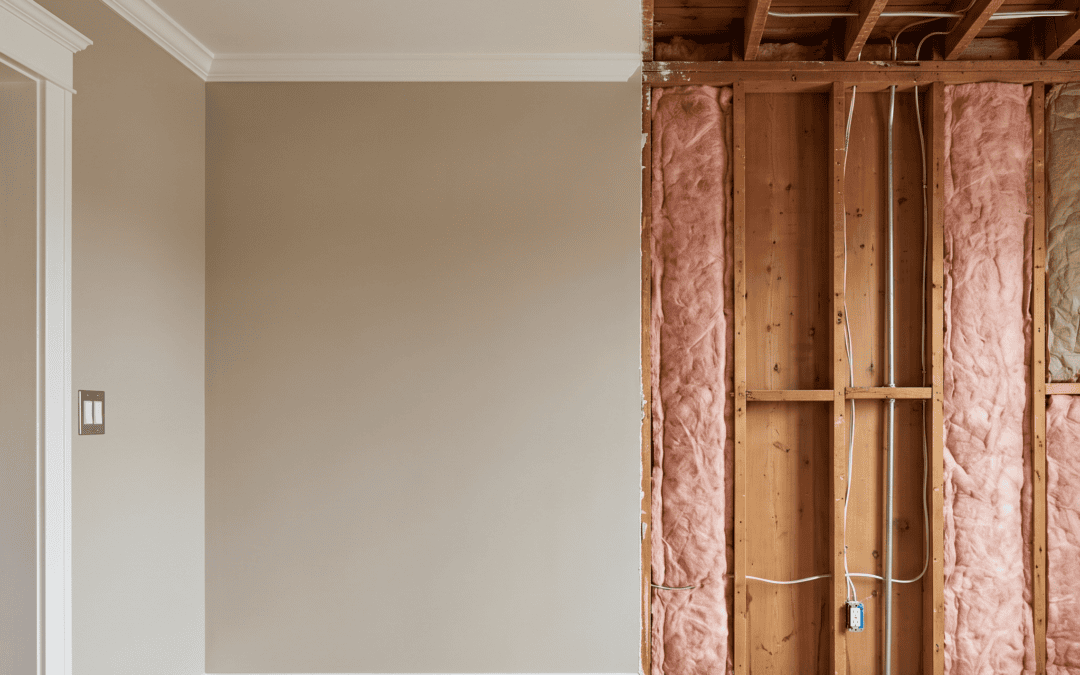
There is a moment in every asbestos removal project that nobody prepares you for. The removalist has finished. The clearance certificate is signed. You walk back into the room expecting progress and find exposed framing, dangling wires, and raw timber where your walls used to be.
The removalist did their job. They removed the asbestos safely and legally. But their job ended the moment the last sheet of contaminated material left your property. Everything after that, the new walls, the ceiling, the eaves, the paint, is somebody else’s problem.
That somebody is you.
This gap between removal and restoration is the most predictable failure point in residential asbestos projects across Sydney. It happens on nearly every job, and it catches homeowners off guard every time. Understanding why it happens and how to avoid it can save you weeks of delay and thousands of dollars in avoidable costs.
How the Industry Is Structured
The asbestos removal industry and the residential construction industry are separate trades with separate licensing, separate training, and separate business models.
Asbestos removal contractors hold a SafeWork NSW asbestos removal licence (Class A or Class B). Their expertise is in hazardous material handling: containment, safe extraction, air monitoring, waste packaging, transport, and disposal. Their work is governed by the Work Health and Safety Regulation 2017 and the SafeWork NSW Code of Practice for the Safe Removal of Asbestos.
Carpenters hold a NSW Fair Trading building licence (or work under one). Their expertise is in structural and finishing work: framing, sheeting, lining, trimming, and installation. Their work is governed by the Building Code of Australia and relevant Australian Standards.
These are different skill sets, different licences, and in almost every case, different businesses. A removal contractor does not carry carpentry tools, framing timber, plasterboard, or finishing materials on their truck. A carpenter does not carry asbestos containment equipment, HEPA vacuums, or waste wrapping materials.
The result is a structural gap in the service chain. The removalist strips the hazardous material. The carpenter installs the replacement. But between those two steps, there is a handoff that nobody owns.
What the Gap Looks Like in Practice
Here is how the typical project unfolds when a homeowner uses separate contractors for removal and restoration.
Week one: the removalist attends site, sets up containment, removes the asbestos, cleans the area, and coordinates the independent clearance inspection. The clearance certificate is issued. The removalist packs up and leaves. The homeowner has a room with no walls (or no ceiling, or no eaves).
Week two: the homeowner contacts a carpenter to quote the restoration work. The carpenter may not be available for a site visit for several days. Once they inspect the site, they prepare a quote and send it through. The homeowner reviews, approves, and books the work.
Weeks three to four (or later): the carpenter arrives, measures, sources materials, and begins the installation. Depending on the scope, the carpentry work may take one to several days. After sheeting, the surfaces need jointing, sanding, and painting (or tiling, in wet areas). Each of these trades may need to be coordinated separately.
The total elapsed time from removal completion to finished restoration can be three to six weeks, sometimes longer during busy periods when tradespeople are hard to book. During that time, the homeowner is living with an unfinished room, exposed framing, and in some cases, reduced weather protection (if eaves or external cladding were removed).
The Hidden Costs
The financial impact of the gap goes beyond the obvious quotes for removal and carpentry. There are several costs that accumulate during the handoff period.
Double mobilisation is the most direct cost. Two separate contractors means two site setups, two material deliveries, two cleanup efforts, and two administration processes. Each mobilisation carries a base cost that is independent of the scope of work.
Scheduling delays add indirect costs. If you are paying rent on temporary accommodation while your bathroom is unusable, every week of delay has a dollar value. If other trades (tiler, electrician, plumber, painter) are waiting for the carpentry to be completed before they can proceed, their rescheduling may incur additional charges.
Communication failures create rework. The carpenter needs to understand what the removalist removed, what framing was left in place, whether any structural elements were affected, and what the final finish requirements are. If this information is not communicated clearly (and it often is not, because the two contractors have no working relationship), the carpenter may make assumptions that lead to rework.
Scope creep catches homeowners by surprise. Once the carpenter opens up the wall and sees the framing condition (rot, termite damage, non-standard spacing), the scope may expand beyond the original quote. These discoveries are common in older Sydney homes, and they are easier to manage when the same team is handling both removal and restoration because they see the framing condition during the removal phase.
Why Most Removalists Do Not Offer Carpentry
The licensing structure is the primary reason. Holding both an asbestos removal licence and a building/carpentry licence requires meeting two separate sets of regulatory requirements, maintaining two insurance policies, employing workers with two different skill sets, and managing two different types of compliance obligations.
Most removal businesses are set up as specialist operators. They invest in asbestos-specific equipment, training, and systems. Adding carpentry as a service line means investing in a completely different set of tools, materials, vehicles, and personnel. For many operators, this is not commercially attractive.
The result is an industry that is optimised for one half of the homeowner’s problem and ignores the other half.
What the Alternative Looks Like
Rosemont Contractors is structured differently. We hold both an asbestos removal licence (AD213403) and a carpentry licence (398318C). This is not a marketing gimmick. It is a deliberate business model designed to solve the gap that every other provider leaves open.
Here is what a project looks like when one team handles the full scope.
Day one: our team arrives, sets up containment, and begins asbestos removal. During the removal, our team notes the framing condition, identifies any structural issues, and confirms the restoration plan.
Day two or three (depending on scope): removal is complete. The independent assessor conducts the clearance inspection. The clearance certificate is issued.
Same day or next day: our carpentry team steps in. They already know what was removed, what condition the framing is in, and what materials are needed because the same company managed both phases. New sheeting goes up, joints are set, and the surface is prepared for finishing.
There is no gap. No second quote. No second mobilisation. No miscommunication between two separate businesses. The homeowner deals with one team, one quote, and one project timeline.
The carpentry restoration is planned from the outset, not bolted on as an afterthought. Materials are sourced before the removal begins. The schedule accounts for both phases. The total project duration is measured in days, not weeks.
How to Avoid the Half-Finished Home
If you are planning an asbestos removal project, ask this question before you sign any quote: “What happens after the asbestos is out?”
If the answer is “that is not our scope” or “you will need to organise a carpenter separately,” you are walking into the gap. It does not mean the removalist is bad at their job. It means their job ends at a point that is not the same as the point where your project ends.
The smartest approach is to engage a contractor who can quote and deliver the full scope: inspection, testing, removal, clearance, and restoration. One contract, one timeline, one point of accountability.
That is what Rosemont Contractors provides across Sydney, the Northern Beaches, Central Coast, and Wollongong. Contact us for a free quote that covers the complete project.