
What Is Fibro and When Was It Used in Australian Homes?
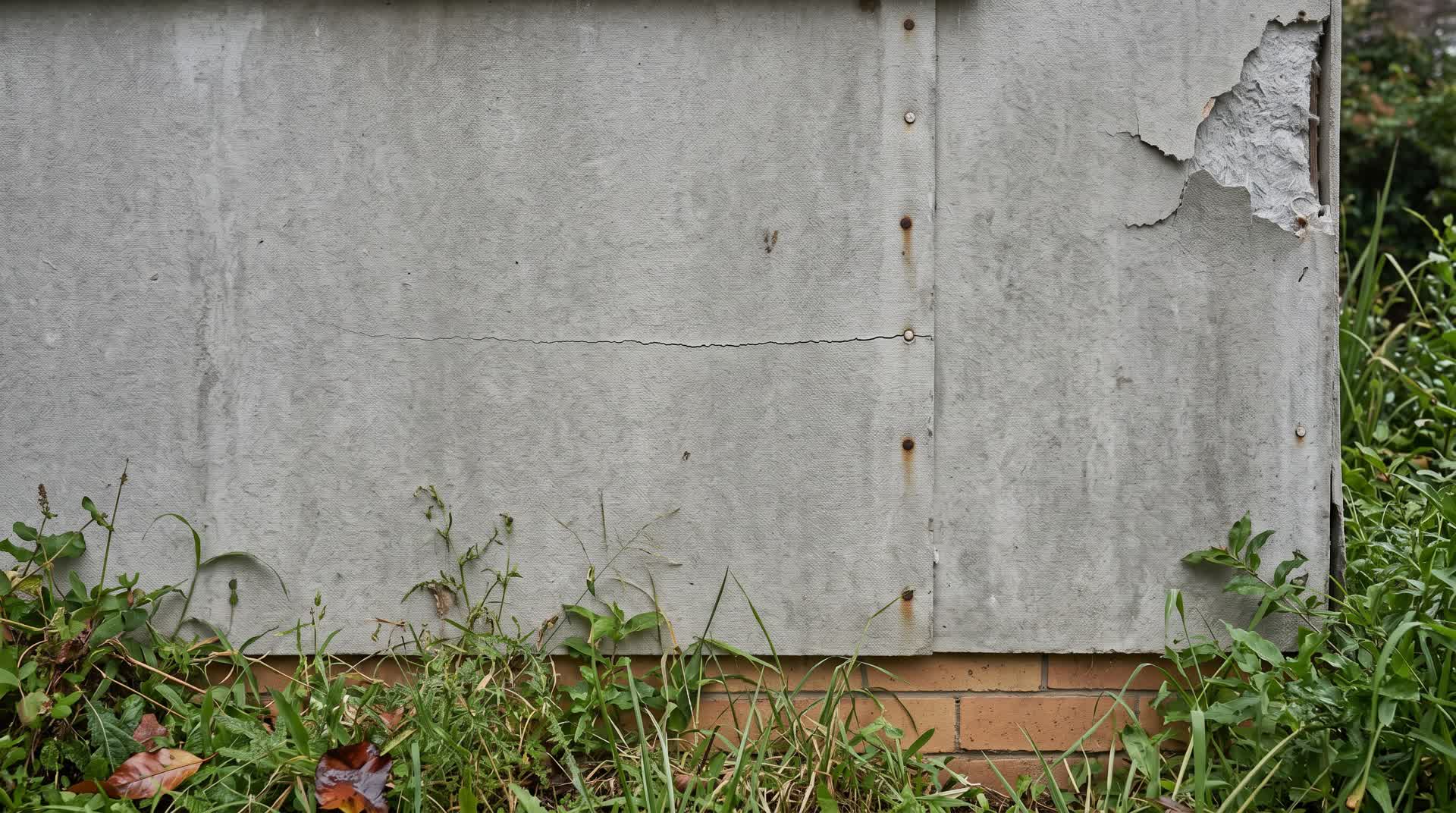
Fibro is the everyday name for fibre cement sheeting, and if your home was built or renovated before the late 1980s there is a real chance it is holding asbestos. The material was cheap, light and weatherproof, which is why it ended up on so much of Sydney: exterior wall cladding, eaves, garage walls, bathroom and laundry linings, and boundary fences.
It is worth being clear about what makes it hazardous. Undamaged sheeting sitting on a wall is not the problem. The problem starts when somebody cuts, drills, sands or breaks it, because that is the moment the fibres become airborne.
Does All Fibro Contain Asbestos?
No, and this is where a lot of homeowners get caught out. Fibre cement sheeting is still manufactured today and the modern product contains no asbestos at all. The two look similar enough on a wall that age is the only useful clue you have without testing.
That leaves you with a judgement based on the era of the building rather than the appearance of the sheet. If the material predates the late 1980s, treat it as suspect until a laboratory says otherwise. Our asbestos removal Sydney team works on this basis every day, because assuming a sheet is safe is the one assumption that carries a health cost.
How to Identify Asbestos Cement Sheeting
There is no reliable visual test. Colour, thickness and surface texture all vary, and the fibres are far too small to see.
What you can do is narrow it down. Look at where the sheeting sits and how the building is put together. Sheets bolted between timber or concrete posts on an older boundary fence, flat sheeting under eaves, and linings in wet areas are all common locations. Our guide to the hidden asbestos locations most inspections miss covers the places people rarely think to check.
The only way to actually know is a laboratory result. A small sample sent to a NATA accredited lab confirms the result, and the report is a document you keep and can use however you need.
Is It Dangerous If Left Undisturbed?
Generally, no. Sheeting that is intact, sealed and not in the path of any work can often be managed in place rather than removed.
The risk is a long one, which is what makes it easy to underestimate. Health effects from asbestos exposure may not appear for 10 to 50 years, so there is no immediate feedback telling you that something went wrong. That delay is the argument for handling it properly the first time rather than the argument for panicking about a wall that is doing nothing.
Condition is what changes the answer. Cracked, crumbling or weather-damaged sheeting is a different proposition from a sound wall, and so is any sheeting sitting where a renovation is about to happen.
Can You Drill or Cut It Yourself?
This is the single most common way people expose themselves and their families. A power tool turns a stable sheet into airborne fibres in seconds, and a dust mask from a hardware store does not stop them.
Licensed work is done under controlled conditions for a reason. Our teams establish controlled work zones using wet methods and HEPA filtration equipment to minimise airborne fibre release, which is not something that can be reproduced with a drop sheet and an open window.
We hold a Class A asbestos licence (AD213403) and an NSW carpentry licence (398318C), so the same team that removes the sheeting can put the wall, eave or fence back. That matters more than it sounds: bringing in a separate trade weeks later means another mobilisation, another quote, and a property left open in the meantime.
What Removal Costs in Sydney
Cost depends on what is being removed and how hard it is to reach. Area, material type, access, whether the sheeting is bonded or friable, and what has to be rebuilt afterwards all move the number, which is why a figure quoted without a site visit is close to meaningless.
Location plays a part too, through travel and disposal. We work across the Illawarra and Sydney’s north, including asbestos removal Wollongong and asbestos removal Northern Beaches, and access on a narrow inner-suburb block is a genuinely different job from a wide coastal one.
If you have sheeting you are unsure about, the sensible next step is a sample rather than a guess. Call 0475 000 021 and we respond to all enquiries within 24 hours, or get a free quote and tell us what you are looking at.