

How Long Does Asbestos Removal Take on a Typical Sydney Home?
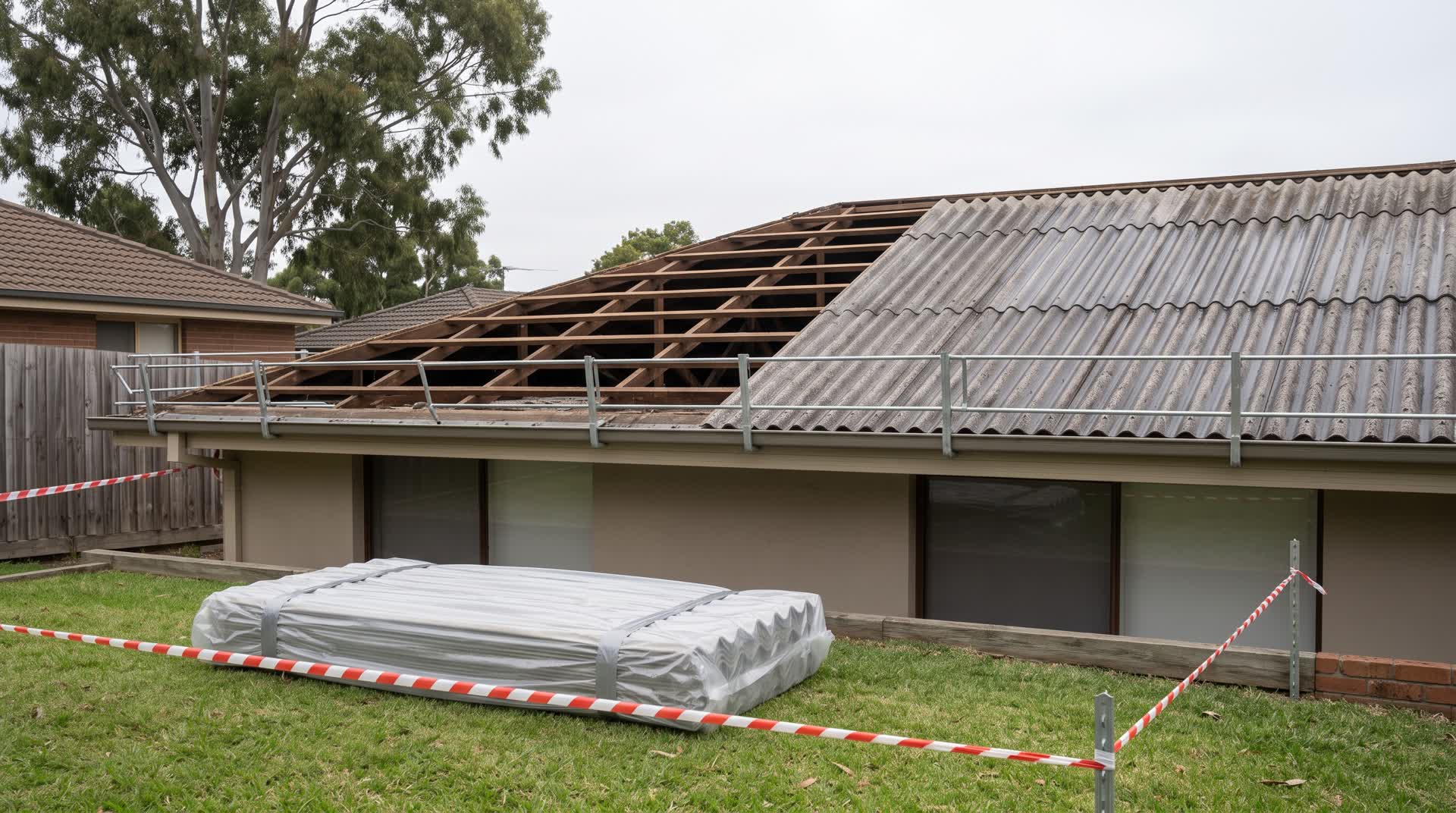
How long does asbestos removal take? On most Sydney homes the removal itself is the short part. Most residential roofs are a one day job, and a commercial Super Six roof at Gymea, 380 square metres of sheeting, came off in four hours. What stretches the calendar is everything around the removal day: confirming the material, booking the site, waiting on the laboratory, and putting the building back together afterwards.
The timeline is a fixed sequence with variable gaps. The sequence is the same on every licensed asbestos removal Rosemont runs: assessment, notification, removal, disposal, clearance. The gaps depend on your property and on how quickly the decisions get made.
What Happens Before Removal Day
Three things happen before anyone touches the material.
First, a free site inspection, booked from an enquiry answered within 24 hours. It settles the method, the access equipment and the timeline.
The second is confirming what the material is. Where it is unconfirmed, a sample goes to a NATA accredited laboratory and the quote is written against the result rather than an assumption. How long the laboratory takes depends on the lab and whether an urgent turnaround is requested, so ask when you book. If you already hold a laboratory report or an asbestos register entry, that step is skipped and the quote is written from it.
The third is the paperwork: a fixed written quote, and SafeWork NSW notification where the work requires it. Sydney metro jobs are usually quoted within a few business days of the inspection.
If the asbestos was found partway through a renovation, the sequence is the same but the pressure is different, because every other trade is on hold until clearance. Our guide on what to do when you find asbestos mid-renovation walks through that situation step by step.
What Decides How Long the Removal Itself Takes
Four things set the length of the removal day, and none of them is the size of the job on its own.
Access comes first. The Gymea roof came off in four hours because the access was straightforward. A steeply pitched residential roof can take longer to make safe than it does to strip, because the scaffold, harnesses and fall arrest have to go up before the first sheet moves. On a Blackheath job pitched at almost 60 degrees, a full scaffold system went in before any removal started.
Containment comes second. An external wall, a fence or a shed can be worked in the open. A ceiling in an occupied house means clearing and sealing the room below, protecting the floors and fixtures, and taking the containment down only after the space has been cleaned and visually inspected. That setup and clean down is a real share of the day.
Material type comes third. Asbestos set into cement sheeting, the fibro most Sydney homes have, is wet down and lifted whole where the fixings allow, then wrapped rather than broken. Loose or crumbling asbestos that can be broken up by hand, such as loose fibre insulation in a roof cavity, sits under a different licence class, is quoted separately and carries a much longer site setup.
Sheet condition comes last. Weathered, cracked sheeting that will not come off whole is handled differently from sheeting that lifts in one piece.
What Happens After the Sheeting Comes Off
The day does not end when the last sheet is wrapped. The load is sealed, transported and disposed of at an EPA approved facility, and the disposal record is kept on file. Roof spaces, gutters and the ground below are inspected and cleaned before the crew leaves, and on outbuildings the footings and surrounding ground are checked for fragments.
Then comes clearance. Independent clearance certification is issued at completion as part of Rosemont’s removal scope, and until it is issued the area cannot be reoccupied or handed to the next trade. On a roof, the new roof does not go on until the clearance is in hand.
Where the removal has left a hole, and most do, the make good follows. Rosemont holds a carpentry licence (398318C) as well as the asbestos licence (AD213403), so the same team can move from removal to relining a ceiling or replacing eaves rather than leaving the property exposed while a second contractor is found. On the Blackheath roof, the licensed roofer was coordinated to start as soon as the removal crew finished.
What Slows an Asbestos Removal Down
The delays that turn a one day job into a multi-week project are rarely on the removal day itself.
Unconfirmed material is the most common. A job cannot be quoted or notified until the laboratory has said what it is.
Restoration left to a separate trade is the second. Bringing in a carpenter weeks after the removal means another mobilisation, another quote and another wait while the framing sits open. Depending on the scope, that can add days or weeks to a renovation timeline.
Access that has to be built is the third: scaffold on a steep or high roof, or a battle-axe block where every sheet is hand-walked to the street.
And a discovery mid-renovation adds the time it takes to stop, test and re-sequence the trades waiting behind the asbestos work.
How Soon Can the Work Start
Rosemont responds to every enquiry within 24 hours and offers same-week bookings where possible. The inspection is the step that fixes the timeline, so booking it early is what shortens the wait.
The service run covers Sydney metro, the Northern Beaches, the Central Coast, Wollongong, the Blue Mountains and Western Sydney. In the south-west that includes asbestos removal in Bankstown.
To the south it includes asbestos removal in Hurstville.
If you want a date rather than an estimate, call 0475 000 021 or book a free site inspection and the timeline will be set from what is actually on your property.