
An asbestos clearance certificate sounds like a clean bill of health for your property. Many homeowners treat it that way. They receive the certificate after removal work and assume it means their home is completely asbestos-free.
That is not what the certificate says. And misunderstanding its scope can create problems down the line, particularly when selling your home, starting the next phase of a renovation, or managing future maintenance.
Here is what an asbestos clearance certificate actually covers, what it does not, and why the distinction matters.
What the Certificate Is
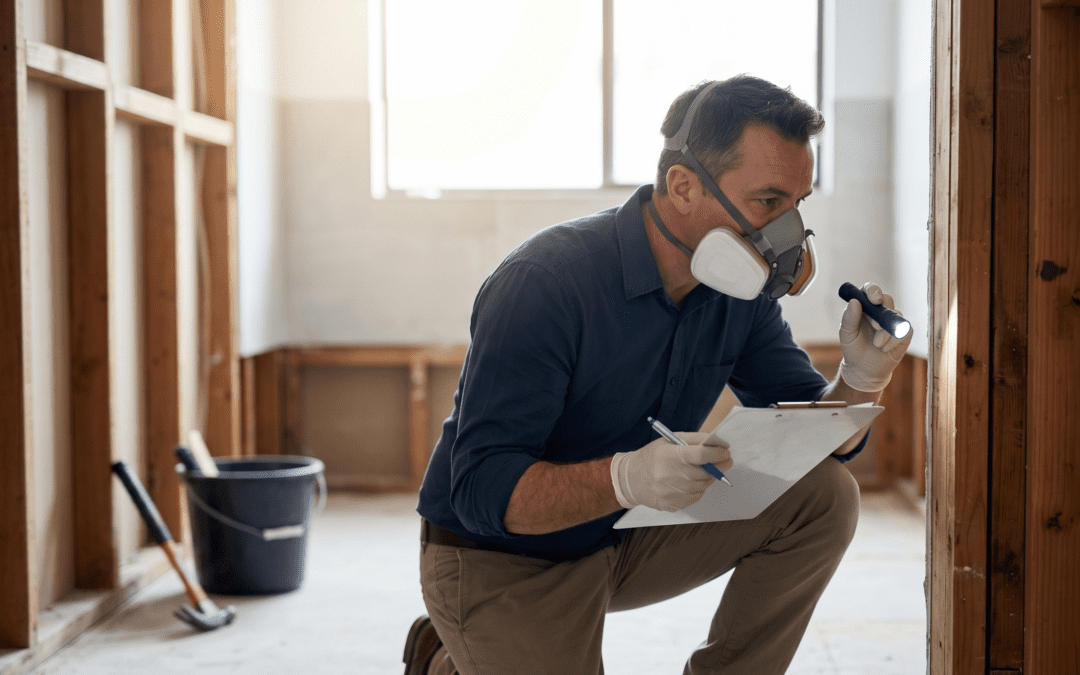
An asbestos clearance certificate is a formal document issued by a licensed asbestos assessor after removal work is completed. It confirms that the specific area where asbestos was removed has been inspected and is safe for reoccupation or for further construction work to proceed.
Under NSW regulations, a clearance certificate is required after every licensed asbestos removal job. The certificate must be issued by an independent licensed assessor, meaning someone who was not involved in the removal work itself.
This independence requirement is critical. It prevents a removal contractor from self-certifying their own work. The assessor conducts their own inspection, reviews any air monitoring results (for friable removal), and makes an independent judgment about whether the clearance criteria have been met.
What the Certificate Covers
The clearance inspection assesses a specific scope, and that scope is limited to the area where asbestos removal work was performed. Here is what the assessor is checking.
Completeness of Removal
The assessor verifies that all asbestos material identified in the removal scope has been removed. They inspect surfaces, cavities, and surrounding areas within the work zone to confirm that no visible asbestos-containing material remains.
Surface Cleanliness
After removal, dust and debris can contain asbestos fibres. The assessor checks that all surfaces in the removal zone have been properly cleaned. For friable removal, this typically involves wet wiping and HEPA-filtered vacuuming of all surfaces within the containment area.
Air Monitoring Results (Friable Removal)
For friable asbestos removal, the clearance process includes reviewing the air monitoring results. The airborne fibre concentration must be below 0.01 fibres per millilitre (f/mL) before clearance can be granted. If the results do not meet this threshold, the area must be re-cleaned and retested.
Containment and Waste
The assessor checks that the containment setup (for friable removal) is intact and that all waste has been properly packaged and removed from the site. Waste packaging must meet the double-wrapping, labelling, and sealing requirements specified in the SafeWork NSW Code of Practice.
What the Certificate Does NOT Cover
This is where the misunderstandings happen. A clearance certificate has specific limitations that every homeowner should understand.
It Does Not Mean Your Entire Home Is Asbestos-Free
The certificate only covers the area where removal work was performed. If asbestos was removed from your bathroom walls, the certificate confirms that the bathroom removal zone is clear. It says nothing about the rest of your house.
Your eaves, garage ceiling, vinyl flooring, fencing, electrical backing board, and window putty may all still contain asbestos. The certificate does not address any of those areas unless they were included in the removal scope.
This is a common issue when homes are sold. A buyer sees a clearance certificate in the property file and assumes it means the home has been fully cleared. It does not. It means one specific area was cleared on one specific date for one specific scope of work.
It Does Not Cover Hidden or Inaccessible Materials
Even within the removal zone, there may be asbestos-containing materials that were not visible or accessible during the removal work. For example, if asbestos was removed from a wall but the wall cavity behind the sheeting contains asbestos pipe lagging that was not part of the scope, the clearance certificate does not cover that pipe lagging.
A thorough asbestos inspection before removal should identify all accessible asbestos in the work area. But some materials are genuinely hidden, and the certificate can only cover what was inspected.
It Does Not Guarantee Future Safety
The certificate is a point-in-time document. It confirms that the area was safe at the time of the clearance inspection. It does not account for changes that happen later, such as new damage, deterioration of adjacent materials, or disturbance of materials in other parts of the home.
If you renovate a different area of your home five years from now and discover asbestos that was not part of the original removal scope, your clearance certificate from the earlier job has no relevance to that discovery.
It Does Not Replace an Asbestos Register or Management Plan
For commercial properties, an asbestos management plan documents all known asbestos-containing materials in the building and how they will be managed over time. A clearance certificate for one removal job does not replace the management plan. It becomes part of it: one record among many that document the building’s asbestos history.
For residential properties, NSW does not require a formal management plan. But if you know your home contains asbestos in multiple locations, keeping a written record of what has been removed, what remains, and what condition it is in is a smart approach. The clearance certificate is one piece of that record, not the whole thing.
Who Can Issue a Clearance Certificate
In NSW, clearance certificates must be issued by a person who holds a licensed asbestos assessor qualification. The assessor must be independent from the removal contractor. They cannot be an employee, subcontractor, or business partner of the company that performed the removal.
The assessor is typically engaged separately by the homeowner or by the removal contractor on the homeowner’s behalf. Either way, the homeowner should understand that the assessor’s fee is separate from the removal cost. It is not an optional add-on. It is a regulatory requirement.
When selecting an assessor, confirm that they hold a current licence and that they carry professional indemnity insurance. The licence can be verified through SafeWork NSW.
Common Misunderstandings
A few misconceptions about clearance certificates come up repeatedly.
“My contractor said they would handle the clearance.” This is fine if the contractor is arranging for an independent assessor to attend the site. It is not fine if the contractor is planning to issue the certificate themselves. The removal contractor cannot self-certify.
“I do not need a certificate for a small job.” If a licensed contractor performed the removal, a clearance certificate is required regardless of the size of the job. The only exception is for homeowner DIY removal under the 10 square metre threshold, where a clearance certificate is not legally required (though it is still a good idea if you want documentation for future reference).
“The certificate means I can sell my home as asbestos-free.” No. The certificate covers a specific area and a specific scope. Representing your entire home as asbestos-free based on a partial clearance certificate would be misleading and could create legal problems during the conveyancing process.
What Happens After Clearance
Once the clearance certificate is issued, the removal area is formally safe for reoccupation and for further construction work. For most homeowners, this means the next step is restoration: replacing the walls, ceilings, eaves, or flooring that were removed along with the asbestos.
This is the handoff point that causes the most frustration in renovation projects. The removalist has finished, the certificate is in hand, but the space is stripped back to bare framing. Now you need a carpenter, and that carpenter needs their own availability, their own quote, and their own timeline.
Rosemont Contractors avoids this handoff entirely. We hold both an asbestos removal licence (AD213403) and a carpentry licence (398318C). We manage the removal, coordinate the independent clearance, and then our carpentry team steps straight into the restoration phase. One team from start to finish.
Get the Full Picture
If you need asbestos removal with proper clearance and restoration, Rosemont Contractors handles the entire process across Sydney, the Northern Beaches, Central Coast, and Wollongong. Contact us for a free quote.